Even when evil does its strongest work to silence faith, Christian communities are often resilient and prophetic in their commitments to rise up singing. . .
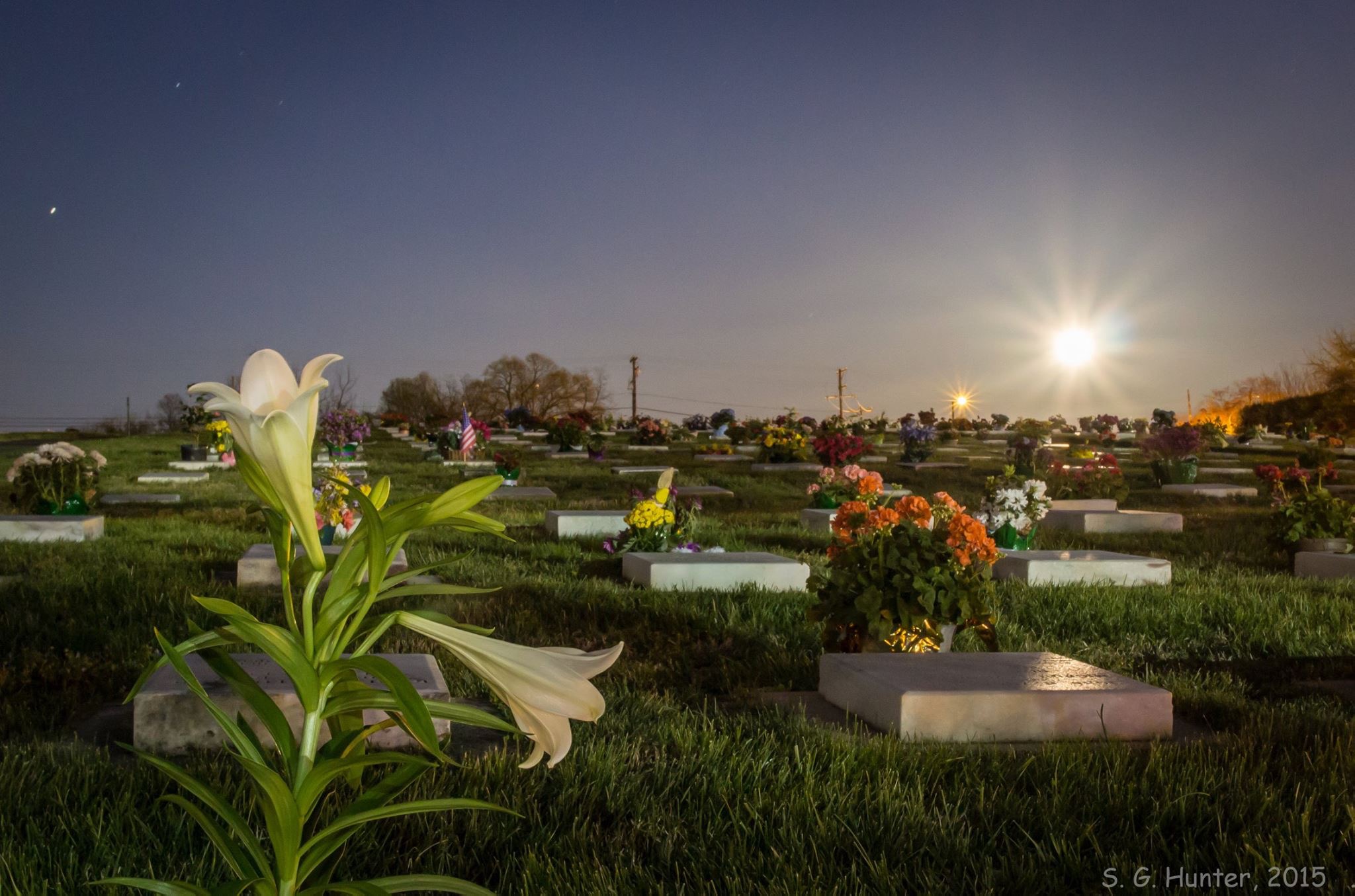
God’s Acre at Old Salem, photo by Sheila Hunter.
Some Christian communities “bury the alleluia” on the last Sunday before Lent or on Ash Wednesday. The tradition originated in the 5th Century when Western churches began to omit the singing and speaking of “alleluia” during Lenten liturgies. Today, some churches still bid farewell to or physically hide or bury the alleluia during Lent and resurrect it during the Easter Vigil to announce with singing the joyous news that Jesus is alive.
Three historically black churches in southern Louisiana and Notre-Dame de Paris were destroyed or damaged by fires during this year’s Christian liturgical season of Lent. This weekend, many churches across the world will observe an Easter Vigil to conclude Lent, carrying the vigil flame into darkened sanctuaries. The violent and tragic church fires are the context for this year’s Easter Vigil fires. The prophetic message? Even when evil does its strongest work to silence faith, Christian communities are often resilient and prophetic in their commitments to rise up singing as they keep watch through Easter Eve for the morning sun to rise yet again.
unburied alleluias
a weary sister walks among the ruins sweeping cold ashes into a dustbin for next year’s lenten initiation she says bending again over the priceless residue
“remember that you are dust and to dust you shall return”
the preacher said just 40 days ago while pressing ashy imprints of mortality on furrowed foreheads
nobody saw it coming— unholy tongues of fire stripping altars bare
out of sync with high holy lenten processions where expectant worshipers catch sparks from an easter vigil flame and carry them into silent holy saturday sanctuaries
she puts a hand on her tired back and when she lifts her face toward the pinking sky a wayward bit of wind stirs the gathered ashes
and even with all other words smothered by smoke and tears she tastes alleluia on her dry lips
Lament is a revolutionary act because it refuses to hide the raw realities of life beneath a veneer of sentimentalized spirituality or triumphant overcoming.
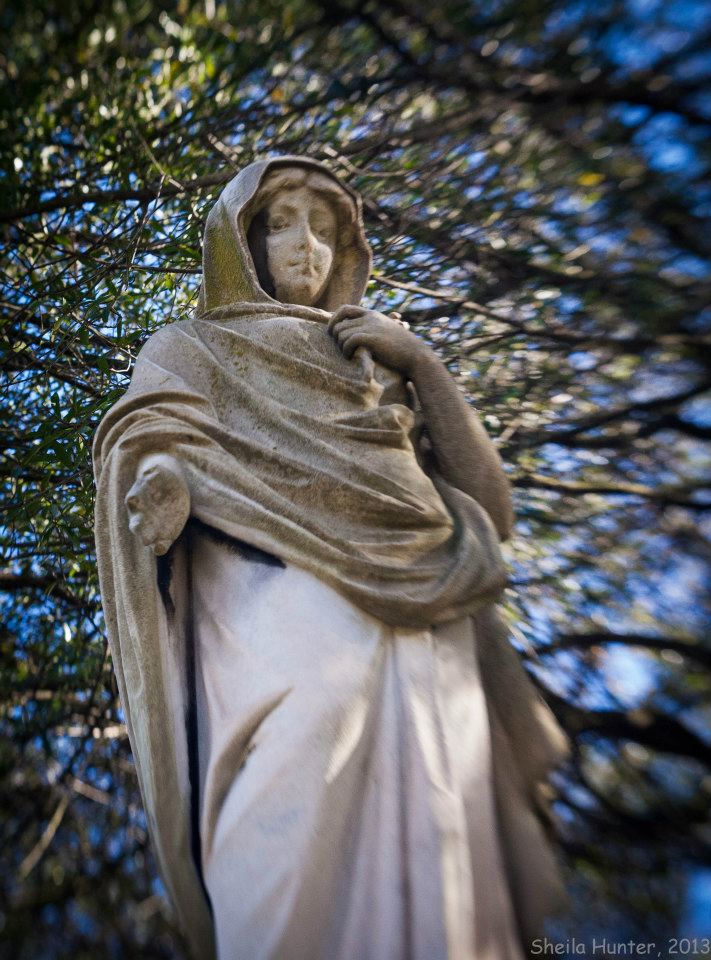
“Lamenting Woman,” by Sheila G. Hunter. Taken at God’s Acre, Home Moravian Church, Winston-Salem, North Carolina
Come Lament. Bring your tears. Scatter them along rocky trails, dissipating petals of unrefined truth to water dry paths. Lean in close, Lament. Place your wizened head on weighed down shoulders; whisper-sing in aching ears.
–Jill Crainshaw
Three public acts of violence shattered innocent lives this week. Pipe bombs were sent to political leaders and news agencies. A white man shot and killed two African Americans at a grocery store in Kentucky. Another white man shouting anti-Semitic slurs opened fire on worshipers at Pittsburgh synagogue. These acts of hatred and others like them across our nation summon us—yet again—to consider what we can do each day to resist the culture of violence that is growing in our nation.
These acts also summon us to lament, for the resisting work we need to do begins, I think, with human communities learning again how to lament. People in ancient communities like the prophet Jeremiah’s community understood lament. Lament was a way people of faith cried out to God in the face of pain and loss that seared hearts and battered souls. Lament was a communal act. Lament was a ritual act passed from one generation to the next. Why? Because the heartache that accompanies great loss is deeply personal and the cloud of witnesses, both historic and contemporary, that surround those in pain—to listen, hold vigil, weep with—prevents weeping from being an isolating experience. Lament arises from and returns to communities of faith and trust, and because of this communal dimension, lament—and lament’s wordless, soundless contortions of pain, anger and grief—is sometimes the only thing that keeps people going when everything good about life seems lost. The very fact of our humanity—its fragility and mortality—needs lament.
As we face the violence in our world today—against black and brown bodies, against immigrants, against people in the LGBTQ community, against women and children, against religious communities and others—and as we seek ways to respond, acts of lament are necessary. Lament is a vital and even revolutionary act because it refuses to hide the raw realities of life beneath a veneer of sentimentalized spirituality or triumphant overcoming. Lament turns her eyes and looks with grief-ravaged love on the violated bodies and weeping family members we see too often in news-feeds from towns and cities across our land. Then, Lament beckons us to see the pain and hear the heartbreak, to repent and seek God’s grace. Lament beckons us to stand with each other. Weep with each other. Wail in grief and rage with each other. And then work with each other across our differences to resist hatred and restore love and grace.
Hear these words of lament from the prophet Jeremiah in the Hebrew Bible:
7 Thus says the Lord of hosts: Consider, and summon the wailing-women to come; send for the skilled women to come; 18 let them quickly raise a dirge over us, so that our eyes may run down with tears, and our eyelids flow with water. 19 For a sound of wailing is heard from Zion: ‘How we are ruined! We are utterly shamed, because we have left the land, because they have cast down our dwellings.’ 20 Hear, O women, the word of the Lord, and let your ears receive the word of his mouth; teach to your daughters a dirge, and each to her neighbour a lament. 21 ‘Death has come up into our windows, it has entered our palaces, to cut off the children from the streets and the young people from the squares.’ Jeremiah 9
Indeed, death has come up into our windows and entered our palaces, and we wail. But our weeping is not enough. Our heart-brokenness is not enough. When Lament is allowed to live out loud as a part of faith, people have the freedom to express not only their deep sorrows but also their outrage and protest when violence, death, and injustice persist. To embody lament as a community is to resist as a community those systems that perpetuate hatred. To join Lament’s journey is to walk into tomorrow and the next day and the next determined somehow, by the power of God’s persistent Spirit, to make space for God’s promises of peace and abundant life for all people.

 Salt: Seasoned Theology