

What remains–
My mother died almost three years ago. We get mail addressed to her almost every week, even from businesses and vendors who have gotten a message from me about her death.
Today when the mail carrier came to our house, our friend John was visiting. John, Sheila, and I were standing on the sidewalk out front. The mail carrier handed Sheila our mail. She thumbed through it, handed me an envelope, and said, “Can’t you tell these people to stop sending mail to your mother!”
I said back to her, “I have already told them–twice. I don’t think we will ever stop getting mail for her.”
John offered sage wisdom in response: “I guess that is the real sign of our immortality.”
We all laughed.
And I began to think about immortality. What else is a theologian to do, after all?
In search of digital immortality?
John then shared a related story about his Facebook account. Not too long ago he received a communication from Facebook asking him who he wants to “leave” his Facebook account to when he dies.
“I guess that is another way to be immortal,” John said.
I Googled “Facebook immortality.” While “immortality” did not score many hits on the search, something else did–a 2015 news headline:
Facebook introduced a new legacy contact feature in the U.S. on Thursday–allowing users to choose who can manage their accounts once they’ve died–and it’s something we should all think about activating. . . Facebook follows Google in providing this type of posthumous functionality, and we expect other sites to follow suit.
Amy Mae Turner, February, 2015
Or posthumous functionality?
Posthumous functionality. Now, there’s a concept to puzzle, if not bemuse, a theologian.
The word “posthumous” is related to “humus,” or ground.
A biblical and liturgical insight comes to mind for me when I hear the word “humus”:
You are dust, and to dust you shall return.
Genesis 3:19, NRSV
The biblical book of Genesis depicts God forming the first human out of the dust of the ground. Then God puts the human in the Garden of Eden “to till it and keep it.”
We are mortal. We are from the earth. Spirit-infused, scientifically and biologically astounding dust but still a configuration of dust. And many of us yearn for immortality, or at least to know that some residual reminder or evidence of our existence will remain when all that is left of us is our remains. Or we ache for our lives to have mattered. Or we hope that when our days come to an end we will have made some sort of difference in the world.
This is not the first time in recent weeks I have wondered about what might happen in the future to all of our digital artifacts. Will technology change so much that photos and other memorabilia stored in the cloud will one day just become incompatible and irretrievable?
But I digress.
For those of us who are dust and will return to the dust, what is our posthumous functionality?
Really?
Sustaining life

Classical theological discussions of immortality come to mind here. Immortality has to do with what happens after physical death, with eternal life in some traditions, with the afterlife as it is understood in diverse religious traditions. Immortality has something to do with what we believe about what happens when we die.
My thinking today about immortality took a different direction as John, Sheila, and I stood on the sidewalk at the end of a workday. As we talked about never-ending junk mail and everlasting Facebook accounts, another word came to mind for me–“sustainable.”
What if we yearned for sustainability–of the earth, of communal well-being, of relationships–rather than for immortality?
I am still reflecting on what this idea means for how I live day to day. I use my Facebook account quite a bit, and I have numerous photos and documents stored in the cloud. I am writing these ideas on my WordPress blog, and I have a YouTube channel. Where will all of that data be in a decade or two? Who knows. And who knows what the digital “me” will look or sound like when the dusty me has expired.
Called to till and tend
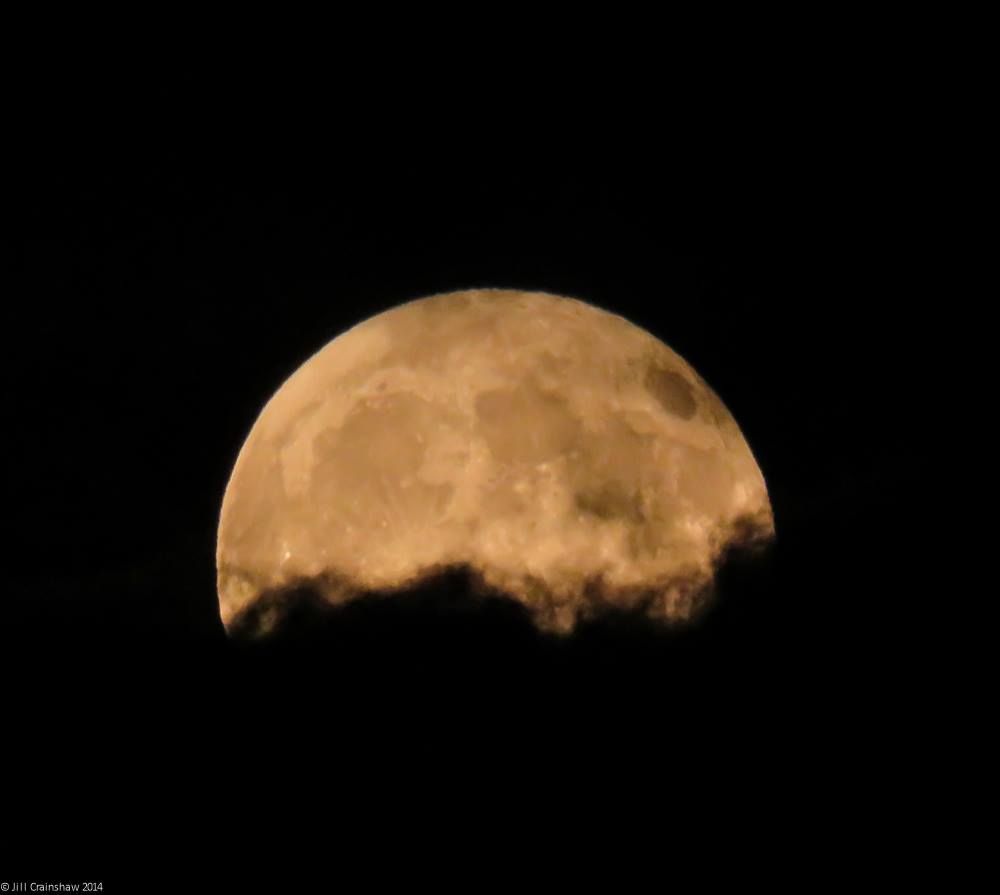
For today at least, I find myself hoping that I can do my part toward sustaining this humus, this speck of cosmic dust we call earth–tilling and tending it so that it is healthy and life-giving for future generations. And I believe that sustaining the earth and our human community requires that I do what I can to engender justice, compassion and reconciliation in the places where I live, work and play.
John didn’t say how he responded to Facebook’s “legacy” invitation. What I know about John’s legacy is this: he lives a life of kind generosity, and I consider him kindred.
And my mom? Well, she lives on in quite a few direct mail databases. But more than that, her life is sustained in and through mine, and for that I give thanks.
dust
I am dust; to dust I shall always return.
But don’t assume as you disturb my rest
with your omnipotent kitchen broom that
I am mere debris to be swept up and away.
Remember. We are interfused, you
and I, suspended in each other,
vestigial particles of endless galaxies,
diminishing and becoming, deposited
but for a moment amid yesterday’s dinner
crumbs and dog hair. Tomorrow?
I am cyclonic, whirling through dry valleys;
And I am the cadence of the soil, eternity
dug up in a spade and sown with ordinary
mystery. Still, don’t assume I am magic either,
or that you are, except when in a distant
sun-soaked garden we tango with the departing
light and time’s muted colors bend onto our
backs and we carry life across ancient seas
to fertilize the future. Remember. You are
dust; to dust you shall forever return.

 Salt: Seasoned Theology