
Coming Home

Advent calls us to work together to create and be for each other home for now until all of God’s children–wandering people that we are–can rest in the fullness of God’s promised home.

Reflections on Advent 2019, Year A

Advent is about comings. In a sense, Advent is about “home”-comings. 

  • Jesus comes to earth–to God’s home? to our home? 
  • God comes into our lives–to abide with us.
  • We await a future “home”-going or “home”-coming–when people stream create a home of justice and peace together on God’s holy mountain. 

An overarching biblical theme of yearning for home enlivens our theologies. We seek what is already but not yet. We journey relentlessly to earthly home-spaces that are not quite home because we remain in both tangible and intangible ways “away” from God. As people of faith, we join biblical ancestors in seeking a Promised Land, a land where there is no weeping or crying or pain. In the meanwhile—until we arrive in that sought-after place—God calls us to do what we can to create God’s home here on earth, in our cities and towns, schools and churches, workplaces and homes.

Some are too much at home in the role of wanderer,

watcher, listener; who, by lamplit doors

that open only to another’s knock,

commune with shadows and are happier

with ghosts than living guests in a warm house.

****

The undertone of all their solitude

is the unceasing question, Who am I?

Denise Levertov


Poet Denise Levertov (1923-2007) writes in a 1946 poem about solitude of being “too much at home in the role of wanderer.” I love Levertov’s poem, though I tend to see faith as calling us to the opposite of what she describes. I hear faith calling us to be at home in the role of wanderer. Never settling for less than justice for all of God’s people. Restless for peace. Always searching for healing, hope, grace. In other words, faith calls us to be at home in the role of wanderer until we one day cross the border into God’s not yet commonplace home.

That, perhaps, is the power of Advent wisdom. Jesus’ followers can never stop seeking. Not until all of the hungry are fed and violence has been stopped and no one feels the sting of exclusion. Not until all have opened themselves to God’s love and are empowered to go out into the world and love others, freed both from arrogance and shame.

But Levertov’s poem says that we risk being too much at home in the role of wanderers. Sounds like a conundrum, doesn’t it? We are called to be justice-seeking wanderers. We are also called to be at home in God’s love. Whew!

I think God’s call to people of faith in the midst of this conundrum is to pray and work together to imagine and create home—welcoming, non-judging, nourishing—home-for-now for all people who are seeking after God’s resting places of justice, grace, and peace.

What does this have to do with Advent? The texts in Year A paint a picture of “home” that is as bizarre as any we might imagine:

  • Lions and lambs nap together.
  • Swords become plowshares and spears pruning hooks.
  • Desert soil blossoms with crocuses.
  • Weak hands and feeble knees are made strong.
  • A dead stump births new life.
  • God is born in a barn.

Advent invites–perhaps even urges–us to watch for the unexpected ways that God is with us. Advent also urges us to imagine how we can be home-for-now for those whose lives are broken, how we can be home for our communities’ strangers, how we can be home for those whose stories have left them isolated, alone, without hope.

Advent calls us to work together to create and be for each other home for now until all of God’s children–wandering people that we are–can rest in the fullness of God’s promised home.

This year’s Advent season–called Year A in the Revised Common Lectionary–immerses worshipers in what we might call “impossible possibilities” that take us beyond the world as we know it to a world of Shalom. I hear in this year’s four weeks of Advent four verbs of expectancy, and I am excited to reflect on these four verbs each week as the Advent journey unfolds.

Watch

Turn

Imagine

Be

Advent 2019

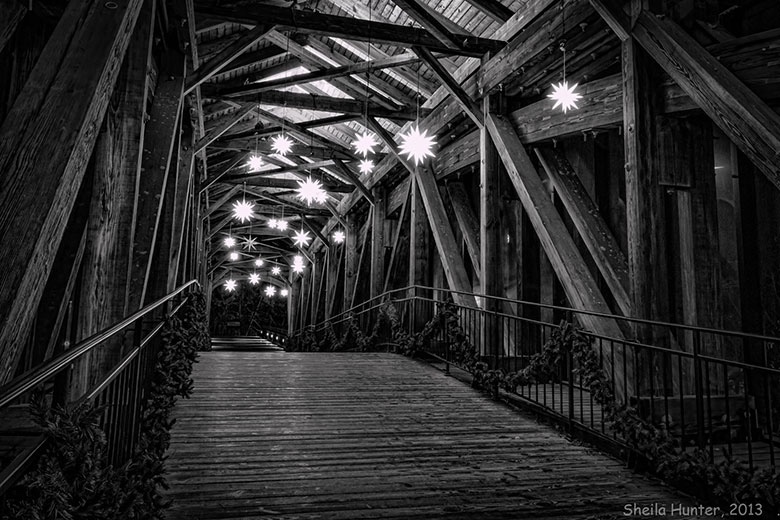
**Note: Featured image is by Sheila Hunter and is used by permission. Thank you, Sheila!
Giving Thanks for Neriah People

They embodied faith and courage when they decided to call a woman as their pastor all of those years ago.

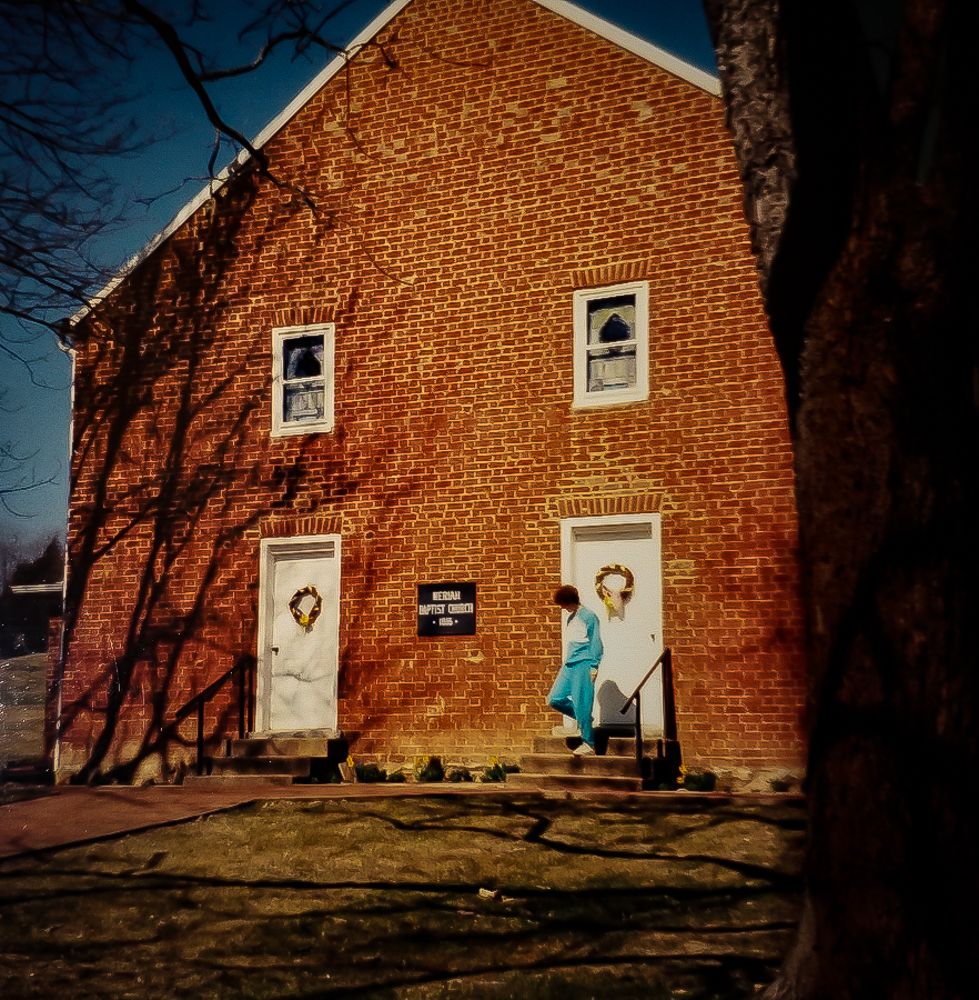
In May of my 26th year, I headed for the Virginia hills with high hopes for my first pastorate. The year was 1988, and the church was Neriah Baptist.

Neriah has an intriguing name. The word “Neriah” is in the Old Testament and is the name of Jeremiah’s scribe Baruch’s father. Neriah means “God is light.”

Neriah Baptist Church was full of God’s light.

Annie Dillard describes churches where members haul in from their gardens each Sunday flower arrangements the size of hedges. Those were Neriah people. Larger than life spirituality. Earth-connected faith. Neriah people—they were truck drivers, teachers, sheep farmers, principals, gardeners, artists, inventors, and determined huggers. And they were people of deep faith.

Now, becoming a pastor is by itself culture shock for someone only a few months out from her last theology exam. And for a town dweller who had never seen a sheep farm and who was a best a reluctant hugger? My education to be a pastor was far from finished.

My Master of Divinity degree prepared me for much of my pastoral work. I could exegete a Biblical text. My mind was alive with theological ideas. But no seminary professor reflected theologically with me about praying for calves in hayfields–something I did in my initial weeks at the church. And giving two sermons in a homiletics course is nothing like preaching every week. Sunday comes. Pastors preach. Then in seven days Sunday arrives, then in seven more days…

So, in the unexpected 4th year of my MDiv when I was called to be a pastor? I learned that Neriah people longed to hear a Gospel word every Sunday. I also learned that the hospital was 60 miles away and that driving to and from the emergency room in the night’s wee hours was wearying and that there were meetings and phone calls and pastoral visits and that all of this left little time or energy for a whole lot of things I thought would be my Gospel work.

What I now know and believe is this: all of it, baptizing and breaking bread at the table, blessing a child moments after she comes screaming into this old world, picking green beans with a church member while he cries and cries because his wife has been diagnosed with cancer—all of it, the grand pastoral actions and the ones that seem mundane. All of it is, well, liturgy.

Liturgy. Cathedrals come to mind. And communal prayer. And Gospel choirs. Liturgy is worship.

And in the ancient Greek city-states of 2500 years ago where the word was birthed, liturgy or leitougia meant “work of the people.” Liturgy in that context was work people did at their own expense for the public good—anything from street cleaning to bridge-building.

I wonder. What happens when we put the two meanings together? Liturgy is the work of the people to praise God; liturgy is also the work of the people to join God in God’s everyday work to care for and transform the world.

Neriah people taught me to embrace all of the meanings of liturgy. They taught me to get the dirt of creation underneath my fingernails, and in doing so, they instilled pastoral wisdom in me: the things we do again and again each day because we must? These things are liturgy, and God dwells in them and in us as we take up our everyday callings one moment, one step, one action at a time.

Neriah people taught me about bold works of justice-making when against all financial odds we opened a food pantry for people in our community. Neriah people taught me how to pray at hospital bedsides and offer blessings at dinners on the ground. Neriah people taught me to be a pastor.

I think about my Neriah years and Neriah people almost every day, and I thank God for their persistent faith and their generosity in sharing that faith and their wisdom with me all of those years ago. They embodied courage when they decided to call a woman as their pastor no matter what criticism might come their way as a result. I celebrate that I was the woman they called and that I had the opportunity to live out and deepen my calling to preach while working and worshiping with them.

My prayer for these days? I pray that we may all know the mercy and grace of Neriah–God is light–in our lives as we continue to work together to share Gospel justice, hope and love in our broken world. May we find the courage and faith to be Neriah people