
Who Indeed?

Who will save us?

Who?

Who?

Penny and Bella have ears to hear
what I cannot—

We cock our heads
toward the tree outside the
living room window and listen
for the Monday morning cry:

Who?

Who what?

Who is that?

Who am I?

Who?

So a day in the life begins
with barking dogs and sleepy-eyed
gazes up into backyard trees—

Who indeed—

At work we wonder together
over coffee in a morning
of magical meetings,
ponder tangled tree vines
of abiding belovedness,
wander around in each other’s stories,
while time stops, just for a moment—
who are we?

Later, a different we WebEx-es to Peru;
who can save rainforests from goldrushers?
A river of life runs through those trees—
“Madre de Dios”—
who will save us?

Later still, another we
praises the power of mighty oaks
to bend down close and breathe
beatitudes into broken bodies; then we
cheer as a third-grade drum major
rehearses his moves right there
in the middle of the office floor,
tubas and trumpets and trombones
blaring out from an iPhone
plugged into the wall.
We—celebrate mighty oaks and
relish who he is,
imagine with joy
who he will become.

Home. Facebook remembers.
I do too. One year ago today
a communal we made a
pilgrimage to Temple Emmanuel.
Lit candles.
Held vigil.
Held hands. Prayed
for the Tree of Life and
for lives lost to violence.
Who will save us?

So it is night. We—Bella and Penny and I—
are waiting—

—listening.

An owl.
Settles into the nook
of a stalwart tree out back.
No cheerful aria.
Instead a melancholy cry—

Who?

Who am I?

Who are we?

Sleep comes and
with it a prayer:

Who indeed—

Note: Wake Forest University has an amazing research partnership in Peru called Cincia—Centro de Innovacionetr Scientifica Amazonica. I met the director of the program, Luis Fernandez, through WebEx today. Cincia is working with a wide range of partners, including local Peruvians, to combat deforestation in the Peruvian rainforest. Madre de Dios means “Mother of God” and is a region in the south of Peru covered by dense Amazonian jungle.
Broken and Spilled Out

“Call for the mourning-women. To come.” Jeremiah 17

A reflection for World Communion Sunday, 2019

So many people today are disconnected from the necessity and power of lament. We resist facing into the reality of pain, unable or unwilling to acknowledge that being honest about the suffering we have caused or the suffering we have experienced is a vital step toward healing. 

When the daily news is as filled stories, essays, and editorials about violence and needless deaths as it has been in recent months, I yearn for the rediscovery of individual and communal lament. We need to mourn. To be honest about our humanity. To confess our sins against the humanity of others. 

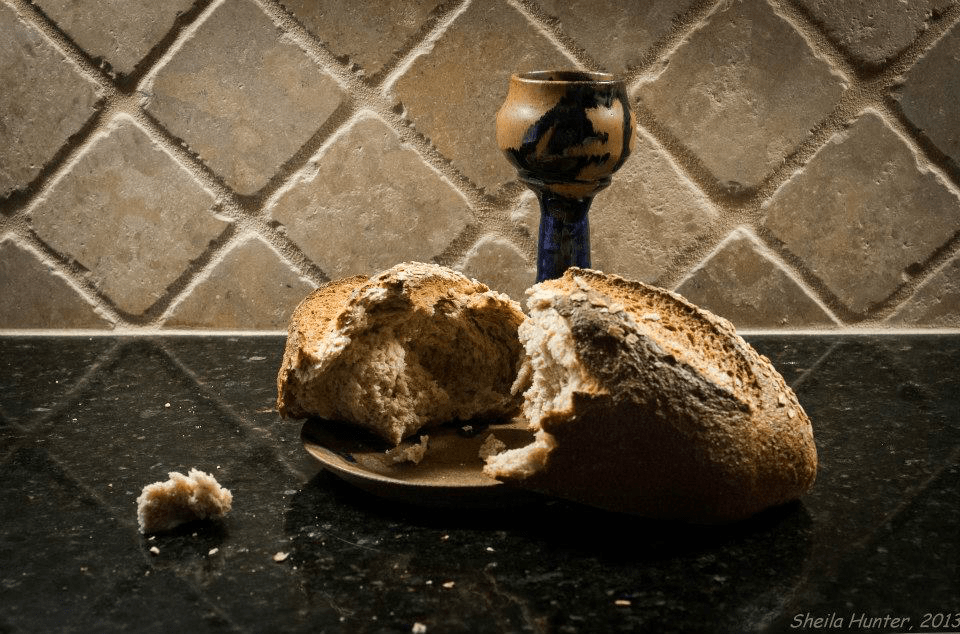
Many Christian churches around the globe will observe World Communion Sunday this week. We will break bread and remember the story of the violent death of Jesus. We will remember how Jesus shared bread, stories, hopes, dreams, and desires with his friends just before he he was crucified. We will share bread around the Lord’s Table with our friends. Maybe as we remember that bittersweet meal Jesus shared we can take time to lament our communities’ sins and the wrongs perpetuated as a result. I hope this poem invites that. 

Broken and Spilled Out

Call for the mourning-women to come; send for
the skilled women to come;
let them quickly raise a dirge over us,
so that our eyes may run down with tears,
and our eyelids flow with water.
Jeremiah 17

Intending to comfort
(or is it to avoid lament)
they utter pedestrian platitudes
(with unconvincing certainty).

Don’t you hear the weeping?
(Really—how can they not?)
The wailing?
(This is no ordinary pain, if
there is such a thing
as ordinary pain.)

We gather around a table
to break bread,
to pour out wine
in remembrance of—

(Name them, the devastated ones.
Name all of them. No matter
long it takes. The ones we too
quickly forget. The ones we
don’t take notice of. Even the
undeserving ones? Even
them. Especially them.
Because of them.
Because of us.)

Hearts mangled.
Souls ruptured.

Bodies crucified.
Blood spilled out.

Bread.
(Wounded.)

Remember.