
The second day of Holy Week after Palm Sunday is Holy Monday.
Varying traditions tell of several things that may have happened on the first Holy Monday in the Christian tradition. Jesus cleanses the temple on Holy Monday and curses a fig tree (Matthew 21). One of the lectionary readings for Holy Monday tells the story of a woman in Bethany anointing Jesus with expensive oil.
Holy Monday also includes a reading from the prophet Isaiah.
Here is my servant, whom I uphold,
my chosen, in whom my soul delights;
I have put my spirit upon him;
he will bring forth justice to the nations.He will not cry or lift up his voice,
or make it heard in the street;
a bruised reed he will not break,
and a dimly burning wick he will not quench;
he will faithfully bring forth justice.He will not grow faint or be crushed
Isaiah 42
until he has established justice in the earth;
and the coastlands wait for his teaching.
Reading this ancient text on Holy Monday during the COVID-19 crisis, my focus was drawn to the prophet’s powerful images of bruised reeds not broken and smothered wicks not quenched. What do these images mean for us as we journey toward Easter on a week when headlines warn of COVID-19 deaths, overwhelmed hospitals and health care providers, and frightening economic vulnerabilities for far too many people?
Many of us see and hear present day human woundedness in these images. We are bruised reeds and smothered wicks. We are people who are faint with worry and fear.
We are indeed worried and afraid in these uncertain days. And one gift Isaiah promises is a Chosen One who comes to our lives to bring spirit-infused justice and tender care.
Another way to think about the bruised reed and smothered wick during this Holy Week comes to mind as well.
The Chosen One does not seek political clout or military might. The Chosen One comes to bring justice but not in the ways the world expects.
In Matthew, Jesus quotes Isaiah 42, and many in the Christian tradition associate Jesus with Isaiah’s Chosen One. On this Holy Monday, we can imagine Jesus as a justice-maker and life-redeemer who defies the ways of the world. Jesus will not stop until he has sown seeds of justice into every corner of the earth. He will see the work of redemption and resurrection through to the end–even through suffering.
But he moves through the world with such care and in such an obtrusive manner that
as he passes through the marshes, not even bruised reeds will break off. Not a twig will snap. His draft won’t have enough force to blow out even a smoldering wick.
Peter Krol
Hmm…what can that mean? Don’t we want to see the footprints–the trail markers–where Jesus has walked so that we can follow? Don’t we yearn for tangible evidence that Jesus has passed by this way?
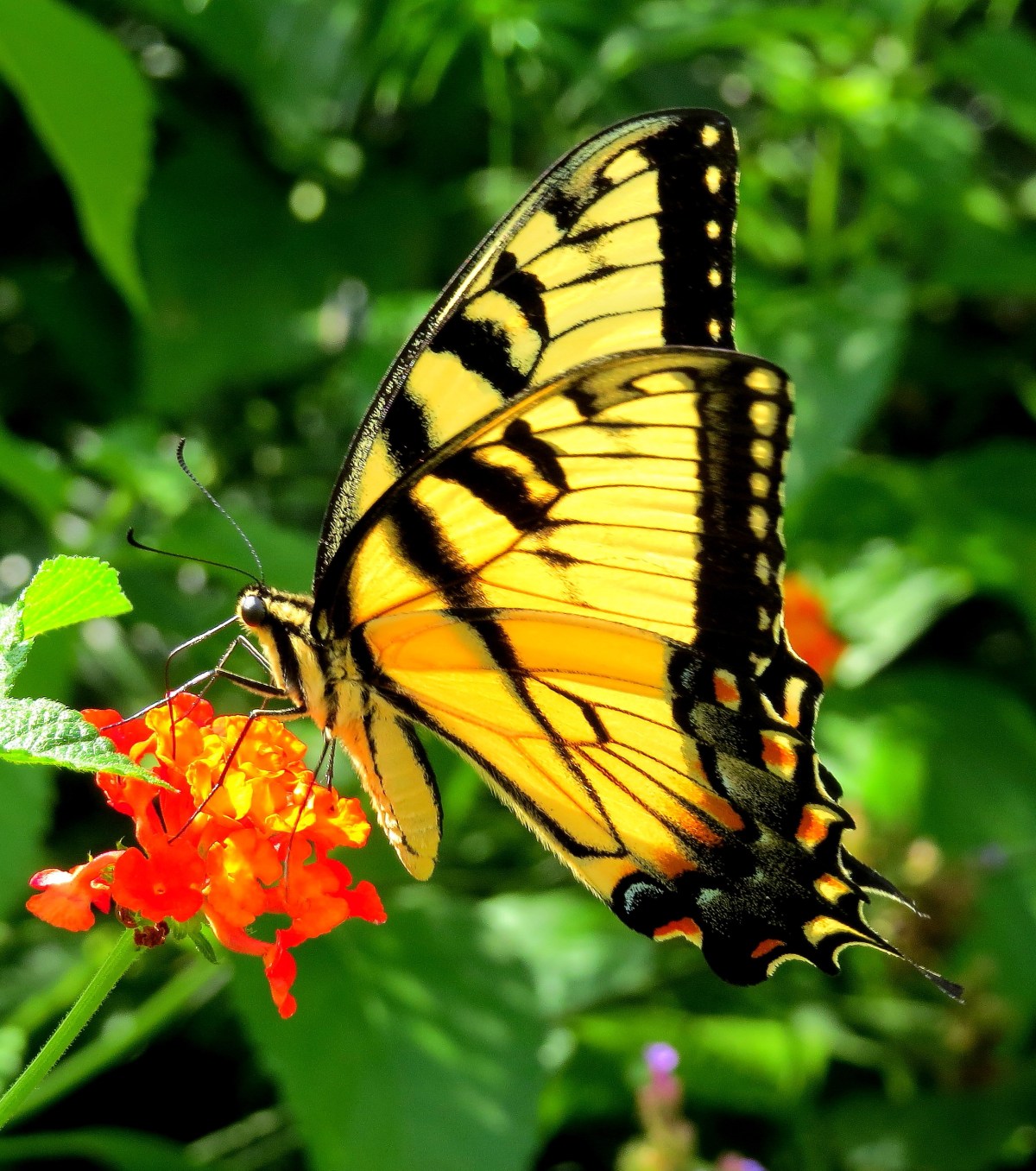
Because I am spending much of my time distant from friends but close to the dirt in my backyard, butterflies come to mind. I saw my first butterfly of the season yesterday.
As I watched that butterfly dance on the wind, I was reminded of Isaiah 42 and the Butterfly Effect. The Butterfly Effect in chaos theory refers to the idea that small actions have a more significant impact than we realize.
The simplified explanation of the Butterfly Effect goes something like this:
A butterfly flaps its wings in Chicago and a tornado occurs in Tokyo.
What does this have to do with bruised reeds and smoldering wicks during this Holy Week?
Jesus models for us a way to change the world that involves recognizing the power and promise of actions that defy existing structures of power and prominence. Every action we take–even the small ones–matter and can make a bigger difference than we realize.
We are living in times of unsung and unnoticed heroes. Health care providers, public school teachers, ministers, and others are doing everything they can to keep fires of hope burning in all of our lives. Many of them are risking their own well-being to provide this gift.
On this Holy Monday, we can celebrate a Justice-Making Jesus who moves through the earth with tender care for bruised reeds and smoldering wicks even as he resists–and overturns–the unjust power structures that so readily toss bent reeds on the trash pile and extinguish struggling flames.
We can also offer a word of gratitude for those heroes who together in their quiet and often unseen ways are saving our communities. Perhaps without realizing it, we are those heroes too, doing our part to foster the well-being of our cities and towns by staying home. By doing that we are tending to bruised reeds and smoldering flames and in unexpected ways living the Gospel.
a butterfly prayed for me today
or so I imagined
when I saw her fold her wings
and open them up again as she danced
over a fuschia azalea blossom
in our backyard
i wonder–
did the air around her flutter
as some scientists say though
i couldn’t hear the faintest whoosh
who even notices a bent stalk
in a tumultuous sea of reeds
and yet butterflies push through
cocoons to commune
even with wounded ones
we are dust and ashes
smoldering wicks
straining to hold the light
and a butterfly prayed for us today

 Salt: Seasoned Theology