
But Thomas (who was called the Twin), one of the twelve, was not with them when Jesus came.
John 20
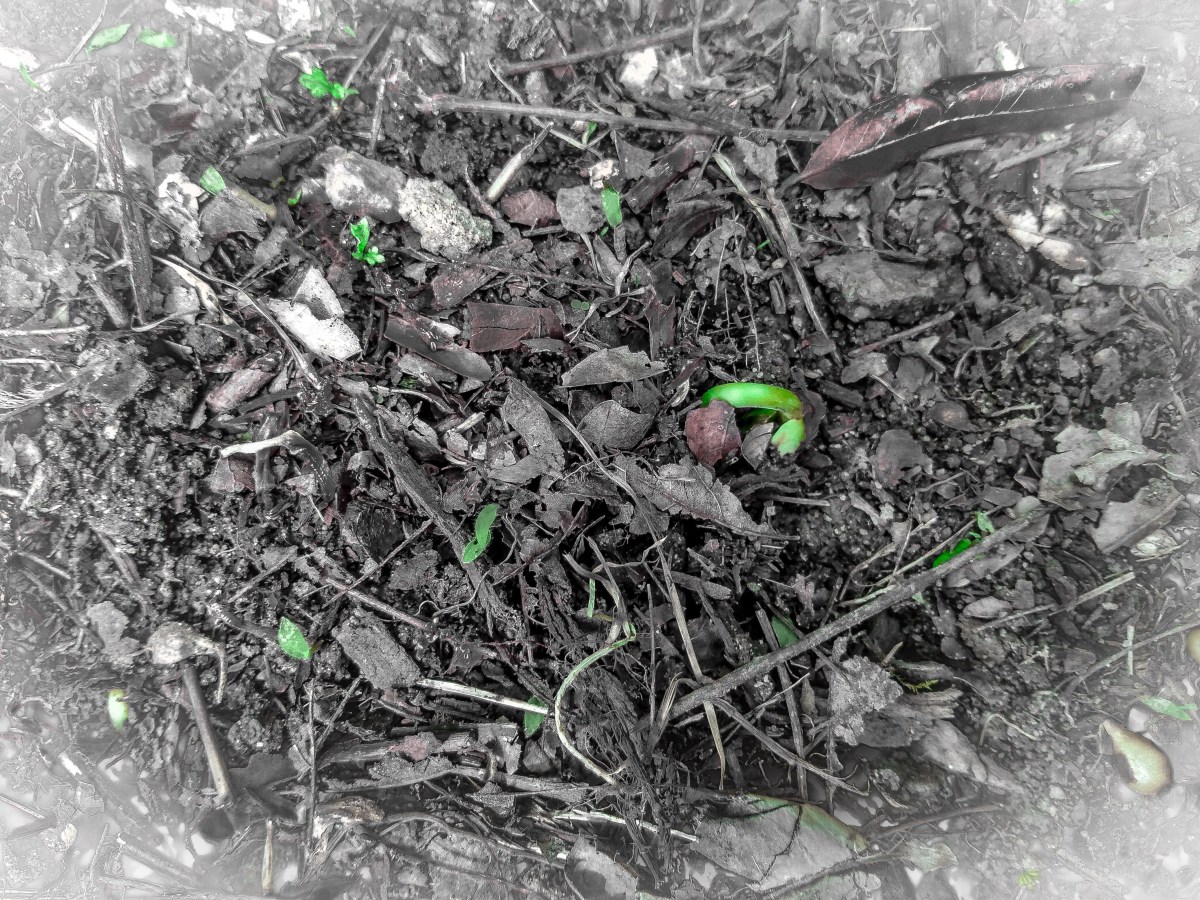
She squats on the ground.
Bright eyes spotlight
the hose-dampened dirt.
What is it? I ask.
Without taking her eyes
off the hushful earth,
she cups her hands
and whispers a prayer
to the loamy sod—
“I hear the seeds growing.”
and she sows a kiss
into the breeze to me.
Thomas had his doubts
He wasn’t there in the upper room the first time the resurrected Jesus visited the disciples. We don’t know where he was. Running behind schedule? Suited up in mask and gloves and headed to the grocery store to get food for everyone?
Whatever the reason, Thomas missed the excitement. The shock. The surprise.
Many of us can probably recall a time when we missed out on a big event. Have you been the one friend who couldn’t make it to another friend’s surprise birthday party? Have you ever you missed a wedding? Or a reunion or other life-marking event? Maybe you had to work on the appointed evening or you were out of town or you were caring for a family member.
Whatever the reason, you missed the moment. The startle. The surprise.
And because you missed the event, you could only connect to the moment second hand, at least at first.
Secondhand storytelling
It’s not easy being the one who wasn’t there when the storytelling starts and everyone who was there talks about what happened and how they felt and even how they were changed. That firsthand storytelling is powerful, full of emotion. And the stories connect the people who shared the event.
And Thomas? He missed the biggest event of all—Jesus’ post-resurrection appearance.
That’s why I feel for Thomas when I hear this resurrection story in John. He wasn’t there when Jesus first appeared, and he was skeptical when they told him a crucified human was alive again. Because of this, he has gotten a bad rap, forever dubbed the doubter.
Doubting Thomas
The phrase itself even has a Wikipedia entry:
A doubting Thomas is a skeptic who refuses to believe without direct personal experience—a reference to the Apostle Thomas, who refused to believe that the resurrected Jesus had appeared to the ten other apostles, until he could see and feel the wounds received by Jesus on the cross.
Wikipedia
I feel a kinship with Thomas. It is hard to connect to what we don’t encounter firsthand.
Thomas wasn’t there.
We weren’t either.
Jesus rose up from the dead? He passed through locked doors into the upper room where they were sequestered? Christ is alive?
Thomas had his doubts. And some of us struggle to believe—in God, ourselves, our communities—in anything. Too much evidence points against hope or peace.
At the very least, we have misgivings about the story of love resurrected as it has been told to us. What does Jesus’ resurrection mean in a world where people face violence every day of their lives or where children don’t have access to enough food to eat?
And yet—yet.
Jesus responds to Thomas’ doubts by showing up again.
I love this part of the story.
Jesus comes back to the upper room, and Thomas gets a chance to experience what he had missed. I think Thomas’s doubt expands the story. Adds powerful details to the realness of Jesus’ presence. Reminds us that scars are part of a resurrected body. Jesus was and is connected to the most vulnerable parts of our humanity.
Jesus passes through walls—in this Gospel story and in our lives and world.
Thomas reaches out and passes through Jesus’ wounds. Thomas’ hand reaches into the broken places and another world opens up to him. He moves through a boundary. He sees beyond—
My Lord and my God.
Thomas in John 20
This year has stirred new thoughts for me about Thomas. He struggled to connect to stories about what he did not experience firsthand.
I wonder if the Spring 2020 COVID-19 crisis will have this effect on our children’s children. They will hear from the “ancient ones”—us—about the year that even the schools closed down because of a novel virus. They can find more data and less anecdote in archived news sources. They will see in the historical record that these weeks of social distancing happened.
But their relationship to COVID-19 2020 will be different than that of those who waited in lines outside of Costco or those who searched the city for toilet paper or those who could not hold the hand of dying loved one. They will believe that it happened, but they won’t believe it like we do who are living it in this very moment.
History is like that. And communities have too often fallen short of remembering history in its fullness.
We have an opportunity right now to transform our communities by believing through our converted actions what we are encountering—that human life is all at the same time fragile and valuable and resilient. We have an opportunity right now to decide to carry that belief in our bodies and hearts in tangible Resurrection ways into an uncertain future.
And if we believe in Resurrection in these days by embodying a different and more life-sustaining way of living in the world—if we reach into wounded places and move across old boundaries—
—then our children’s children will—
Hmm….I guess we will have to wait and see and believe—
Blessed are those who have not seen and yet come to believe.
Jesus in John 20
 Salt: Seasoned Theology