

Never love a wild thing, Mr. Bell,’ Holly advised him. ‘That was Doc’s mistake. He was always lugging home wild things. A hawk with a hurt wing. One time it was a full-grown bobcat with a broken leg. But you can’t give your heart to a wild thing: the more you do, the stronger they get. Until they’re strong enough to run into the woods. Or fly up into a tree. Then a taller tree. Then the sky. That’s how you’ll end up, Mr. Bell. If you let yourself love a wild thing. You’ll end up looking at the sky.
Truman Capote, Breakfast at Tiffany’s
Sheila and I vacationed one summer at an abandoned golf course. When the greens on every hole were shiny as polished emeralds, condos were built around the course’s perimeters. While golfing or sipping coffee on the condo screened porch, vacationers could watch seabirds dive into the inlet in search of their evening dinner.
But the under-financed golf club didn’t make it, so when Sheila and I spent our vacation week there to be near the beach, we watched birds float on the wind over a golf course ghost town.
koi subplots
I walked each morning along golf cart paths encroached upon by unruly grass. When I stopped on a bridge over a pond, I was greeted by 18-karat copper and gold koi that smiled up at me as I leaned on the wind-wearied rail. Their looping and circling subplot in the shadowy pond places of the golf course was uninterrupted by the drama of the club’s extinction.
What I remember most about that vacation is that I imagined I was glimpsing the apocalypse. What else is a non-golfing theologian to think when seeing a sand rake positioned teeth up on the ground as though someone abandoned it mid-sweep. But the birds and bugs and beach grass and borrichia frutescens? They harbored no such apocalyptic thoughts. No, they claimed the sand traps and greens as a parousia playground. (Too much with the theological terms? I just can’t resist!)
“In God’s wildness lies the hope of the world.”
John Muir
Hearing John Muir’s words, I can’t help but think about what we are experiencing during these quarantining days of abandoned businesses and bars and streets. The pandemic has stirred fear and uncertainty unlike anything most of us have known in our lifetimes. And it has altered our life rhythms, perhaps forever. I grieve the loss of life to this out-of-control virus, and I worry for those in our cities and towns who were already living on life’s most vulnerable edges.
At the same time, I wonder if we might discover or rediscover the gifts of wildflowers springing up in desert places.
crocus blooms in desert places
Isaiah 35 offers an image of wild hope to “those who are of a fearful heart.” Another way to translate the Hebrew phrase in Isaiah 35:4 is this: “those whose hearts are racing.”
We are those people today. Our hearts are racing, not just in a poetic or metaphorical sense, but literally. Some people’s bodies are wracked with COVID-19. Other people’s bodies are taut with fear and stress—maybe because we want to run away or perhaps because we long to keep running like we always have but can’t because we are suspended in time and space.
Isaiah’s message echoes across the ages to us, an exiled and isolated people with racing hearts, quavering knees, and trembling hands. Isaiah’s message calls out into this current wilderness to us, to a people who are feeling sorrow and fear in our very bones.
What is Isaiah’s word of hope? Wildflowers will shoulder up out of the hard dry ground of desert places. Wildness will find a way in the wilderness.
rediscovering lost playgrounds
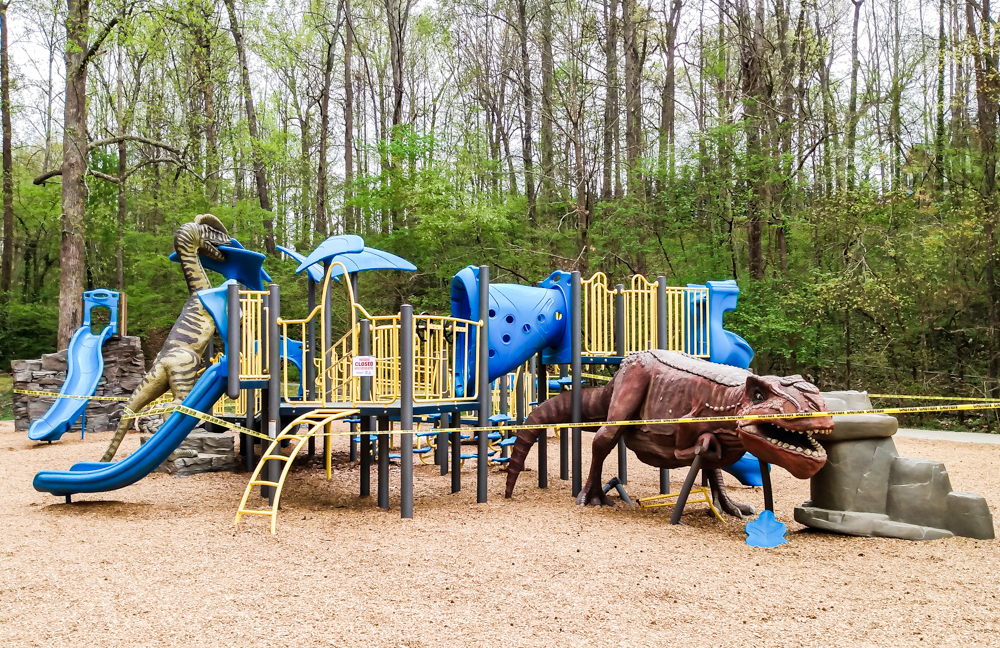
I walked through my neighborhood park a few days ago and was struck by a sad and peculiar sight. Our dinosaur playground–a kids’ space featuring a Tyrannosaurus rex slide and a Stegosauro climbing dome–was cordoned off by yellow caution tape and a sign that said “do not enter due to COVID-19 precautions.”
Our neighborhood children have laughed and played among extinct wild things, and they will again.
In the meanwhile, I pray that in the midst of adrenaline-crazed days when hearts race while bodies are frozen in place, we encounter gifts of generous and restorative wildness sneaking back into our lives.
Maybe wildness will show up as we take more neighborhood walks and meet the pair of urban hawks who are nesting in that patch of woods by the park playground. Or perhaps wildness will adorn our backyard landscapes as weeds bloom alongside salads we plant in newly turned garden spaces.
And maybe–just maybe–the arrhythmia of these days will create an unexpected opening for creative and life-giving wildness to dance up out of the ashes of our own spirits.
Seeking Wildness
“Come out, come out, wherever you are!”
I call to her–
Wildness.
She is a shy child, eager but afraid
to meet a new friend.
No, that’s not quite right–
She’s been leaning on the door all along?
Waiting–then stumbling into view
when the portal suddenly swings open?
“Come in, come in. I think we met
once upon a time ago”–
Wildness.
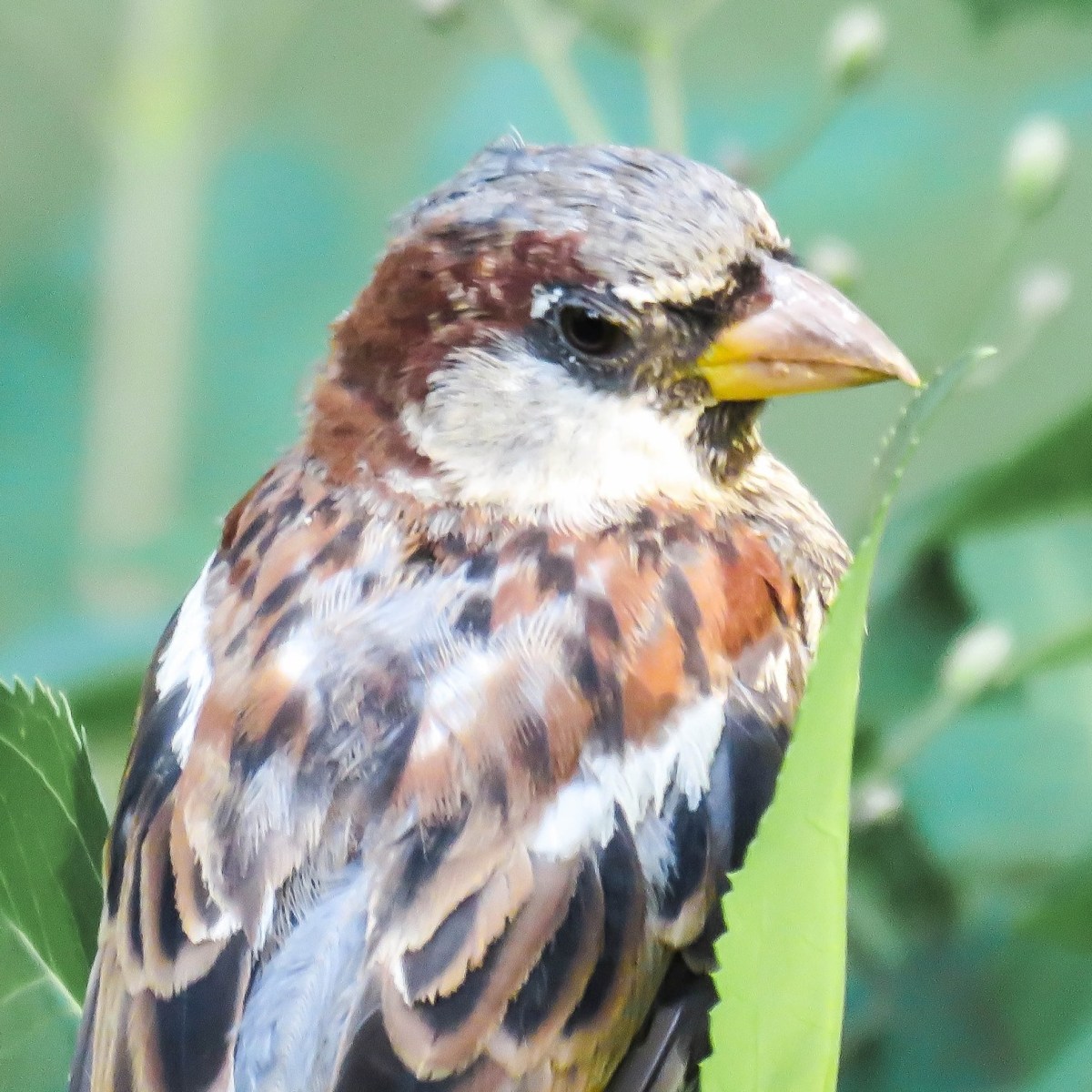
She is in me–sparrow and mockingbird,
wildflower and wilderness wanderer
Yes, that is it–maybe–
She is an uncertain season who beckons me
to a liturgy of her hours–
Wildness.
“Come on,” she says and reaches out.
“Let’s dance, just for a little while.”
I say “yes”–
unclenching my hands to take hers
while all creation sings a song called
Hope.
 Salt: Seasoned Theology