
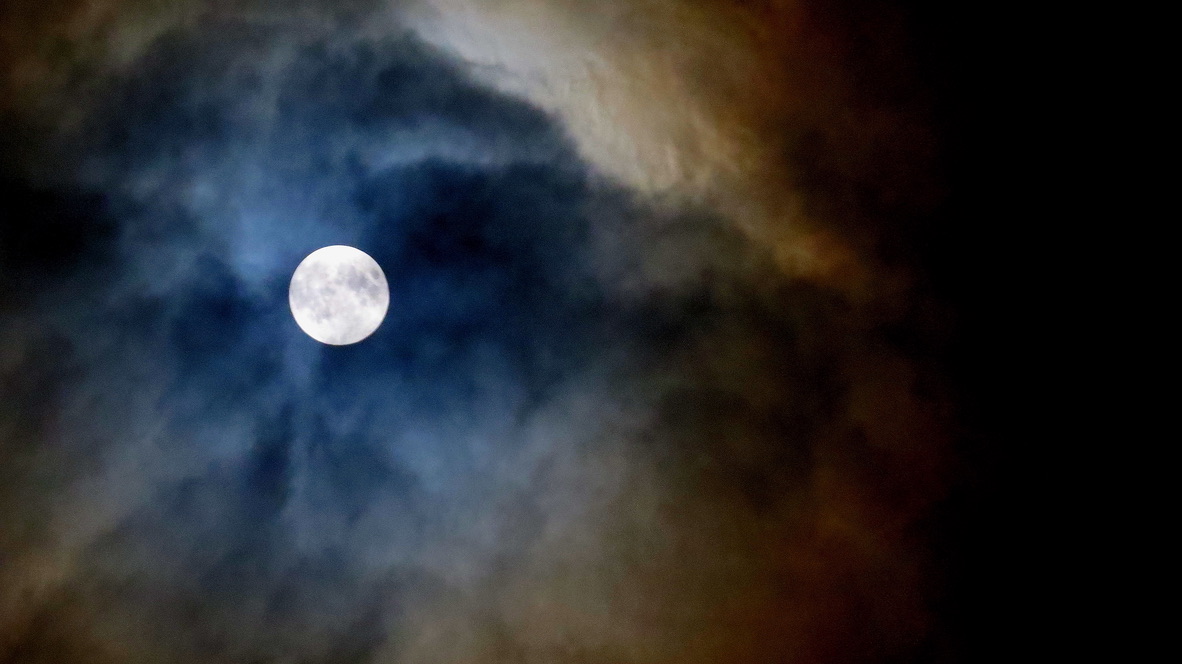
Beneath Our Feet

Giving thanks on Earth Day.

From Psalm 8

When I look at your heavens,
the work of your fingers,
the moon and the stars that you have established;

What are human beings that you are mindful of them,
mortals that you care for them?
And yet. . .

Paul Wallace, a scientist and theologian, wrote an intriguing book in 2015 that explores some of the connections between science, theology, and philosophy—Stars Beneath Us: Finding God in the Evolving Cosmos (Fortress Press). In the book’s introduction, he recalls his “opening spiel” to an introductory astronomy course he teaches.

Under a dark and transparent atmosphere, with an unobstructed horizon and healthy vision, one can see at most about 3,000 stars. And if we were to remove our home planet from under our feet we would see 3,000 more, for a total of 6,000. . .

Paul Wallace

A student in his class was horrified by this news. Why? “It’s just that you said there are stars under my feet, and I had never really thought of it like that before. Wow!”

The concept made me pause in my reading of the book.

The spherical Earth is surrounded on all sides by stars.

Paul Wallace

I don’t often stop to encounter in a visceral way just how expansive the cosmos is. The stars beneath my feet are not tangible to me because they are outside of my daily window of awareness.

I am grateful to Wallace for inviting me to stop for a moment and consider this. A 2013 essay in The Atlantic gives even greater detail about what we can see in our sky.

So, then: Back to you, you tiny little human, standing on the surface of your tiny little planet in your tiny little corner of the universe. How many of those septillion stars are actually visible to you? An extremely, yep, tiny little percentage. There are only about 5,000 stars visible to the naked, average, human eye, MinutePhysics points out. And, because the Earth itself gets in the way, you can only see about a half of those from where you stand.

Megan Garber, “How Many Stars Are There in the Sky?”

I hope that on this Earth Day, in the midst of the COVID-19 crisis, many of us will pause, notice the gifts of our cosmos, and offer a word of gratitude. The pandemic has altered much about the way we live our lives, but it has not changed the stars. In fact, we may be able to see them now with even greater clarity than ever before.

What can we see with the naked eye—the eye that is gazing with more vulnerability than usual and with greater honesty? And what does that gaze—that beholding of God’s beauty—stir us to be and do beneath our part of the sky?

“See? That’s the Big Dipper.
And the Little Dipper is over there.”

We watched the night sky together, Dad and I.
I longed to see what he saw—

Stories in the stars. Fiery folktales of
kings, queens and chameleons;

a lizard, a lynx, and a lion.
Celestial chronicles scripted onto

a black velvet picture book.
I longed to read the stars where

a deranged dragonfish hurtles
toward the earth from two million

miles away. What cosmic superhero
will rise to the challenge? I asked

my dad as he tucked me and
my beagle Hunter into our bed:

“And what is a ‘lesser dog’ by the way?”
Still the astronomical plot eludes

me. Eludes us—if we are wise to
perceive: star-storying? A singular distillation

of collective imagination. Parabolic patterns
premised on where our lives are planted.

Forever made mystical, magical even,
by remembering—when on a clear night

we think we can see forever? The star
so blazing brilliant to our naked eye

burned out yesterday, and always—always—
half the sky is hidden away beneath our feet.
Sowing Kisses into the Breeze

I feel a kinship with Thomas. It is hard to connect to what we don’t encounter firsthand. 

But Thomas (who was called the Twin), one of the twelve, was not with them when Jesus came.

John 20

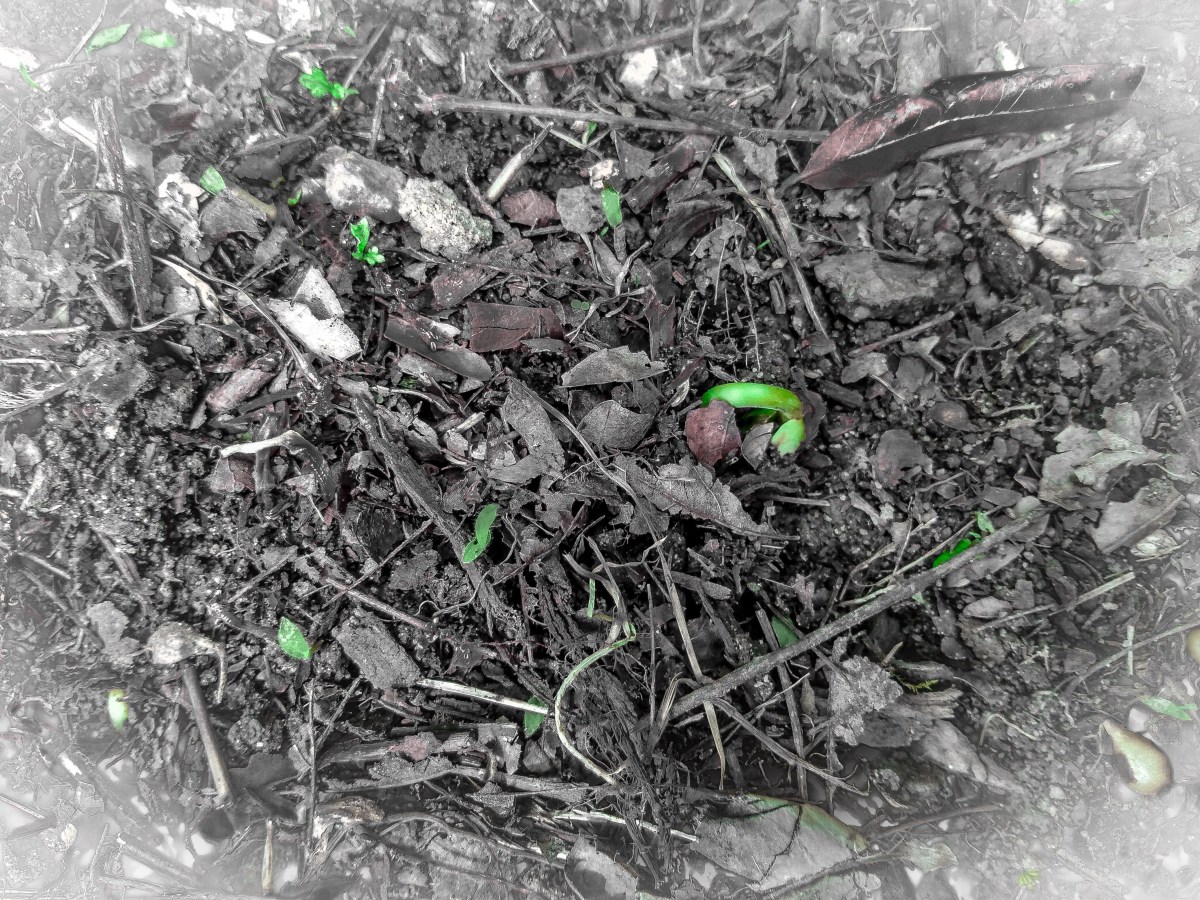
She squats on the ground.
Bright eyes spotlight
the hose-dampened dirt.

What is it? I ask.
Without taking her eyes
off the hushful earth,

she cups her hands
and whispers a prayer
to the loamy sod—

“I hear the seeds growing.”
and she sows a kiss
into the breeze to me.

Thomas had his doubts

He wasn’t there in the upper room the first time the resurrected Jesus visited the disciples. We don’t know where he was. Running behind schedule? Suited up in mask and gloves and headed to the grocery store to get food for everyone?

Whatever the reason, Thomas missed the excitement. The shock. The surprise. 

Many of us can probably recall a time when we missed out on a big event. Have you been the one friend who couldn’t make it to another friend’s surprise birthday party? Have you ever you missed a wedding? Or a reunion or other life-marking event? Maybe you had to work on the appointed evening or you were out of town or you were caring for a family member. 

Whatever the reason, you missed the moment. The startle. The surprise. 

And because you missed the event, you could only connect to the moment second hand, at least at first.

Secondhand storytelling

It’s not easy being the one who wasn’t there when the storytelling starts and everyone who was there talks about what happened and how they felt and even how they were changed. That firsthand storytelling is powerful, full of emotion. And the stories connect the people who shared the event.

And Thomas? He missed the biggest event of all—Jesus’ post-resurrection appearance.

That’s why I feel for Thomas when I hear this resurrection story in John. He wasn’t there when Jesus first appeared, and he was skeptical when they told him a crucified human was alive again. Because of this, he has gotten a bad rap, forever dubbed the doubter. 

Doubting Thomas

The phrase itself even has a Wikipedia entry:

A doubting Thomas is a skeptic who refuses to believe without direct personal experience—a reference to the Apostle Thomas, who refused to believe that the resurrected Jesus had appeared to the ten other apostles, until he could see and feel the wounds received by Jesus on the cross.

Wikipedia

I feel a kinship with Thomas. It is hard to connect to what we don’t encounter firsthand.

Thomas wasn’t there. 

We weren’t either. 

Jesus rose up from the dead? He passed through locked doors into the upper room where they were sequestered? Christ is alive? 

Thomas had his doubts. And some of us struggle to believe—in God, ourselves, our communities—in anything. Too much evidence points against hope or peace. 

At the very least, we have misgivings about the story of love resurrected as it has been told to us. What does Jesus’ resurrection mean in a world where people face violence every day of their lives or where children don’t have access to enough food to eat?

And yet—yet.

Jesus responds to Thomas’ doubts by showing up again. 

I love this part of the story. 

Jesus comes back to the upper room, and Thomas gets a chance to experience what he had missed. I think Thomas’s doubt expands the story. Adds powerful details to the realness of Jesus’ presence. Reminds us that scars are part of a resurrected body. Jesus was and is connected to the most vulnerable parts of our humanity. 

Jesus passes through walls—in this Gospel story and in our lives and world. 

Thomas reaches out and passes through Jesus’ wounds. Thomas’ hand reaches into the broken places and another world opens up to him. He moves through a boundary. He sees beyond—

My Lord and my God.

Thomas in John 20

This year has stirred new thoughts for me about Thomas. He struggled to connect to stories about what he did not experience firsthand. 

I wonder if the Spring 2020 COVID-19 crisis will have this effect on our children’s children. They will hear from the “ancient ones”—us—about the year that even the schools closed down because of a novel virus. They can find more data and less anecdote in archived news sources. They will see in the historical record that these weeks of social distancing happened.

But their relationship to COVID-19 2020 will be different than that of those who waited in lines outside of Costco or those who searched the city for toilet paper or those who could not hold the hand of dying loved one. They will believe that it happened, but they won’t believe it like we do who are living it in this very moment.

History is like that. And communities have too often fallen short of remembering history in its fullness.

We have an opportunity right now to transform our communities by believing through our converted actions what we are encountering—that human life is all at the same time fragile and valuable and resilient. We have an opportunity right now to decide to carry that belief in our bodies and hearts in tangible Resurrection ways into an uncertain future.

And if we believe in Resurrection in these days by embodying a different and more life-sustaining way of living in the world—if we reach into wounded places and move across old boundaries—

—then our children’s children will—

Hmm….I guess we will have to wait and see and believe—

Blessed are those who have not seen and yet come to believe.

Jesus in John 20