
It seems, as one becomes older,
T.S. Eliot, Four Quartets
that the past has another pattern,
and ceases to be a mere sequence.
Liturgical time is not linear. It is cyclical.
As this pandemic Palm Sunday unfolds, I am reminded of the mysteries and gifts of liturgical time. Liturgical—and in some ways quarantine time—invites (if not urges) us to let go of conventional linear understandings of time and enter into God’s time. Kairos time.
Most of our everyday days are spent peering at the world and life through the gridded windows of Google calendars. We live and work and look at the world around us according to the rules of quantifiable and sequential chronos time. Watch time. Clock time.
Scripture sometimes uses the term kairos to talk about God’s time—moments that interrupt our usual calendars and make us more attune to God-with-us.
Life is actually a sometimes rhythmic, sometimes arrhythmic, mixture of chronos and kairos time. Palm Sunday and Holy Week are examples. That first Palm Sunday parade had a chronological beginning point and an ending point along the road to Jerusalem. But it was also an interrupting, disrupting, and grace erupting moment that revealed (or began a process of revealing) the depths of God’s presence in, with, and for human lives.
The powerful and prophetic intersecting of chronos and kairos are being distilled for me on this particular and peculiar Palm Sunday. People are not parading in their sedans and SUVs from homes to church buildings to wave palm branches. Sheila, the pups, and I are at home, sitting on our front porch surrounded by Lenten roses, columbine flowers, dogwood blossoms, and bearded irises that with their scents and colors are joining bumblebees and birds in singing “loud Hosannas.” Soon, we will tune into Facebook Live for our worshiping community’s Palm Sunday service for this quarantined season.
COVID-19 has brought to our cities and towns pain, grief, and fear. It has stopped us in our tracks, suspended us in time, urged us to take stock of what matters in our lives. Countless timelines and chronologies are charting the sequence of the virus and predicting future outcomes. I know this because I have watched the chronologies while looking for some end in sight.
Perhaps this Palm Sunday invites us to consider anew the kairos dimensions of this contemporary reality.
This is not a new need. People in our communities have faced life-denying injustices for many years—across too many generations of chronologies. And the Gospel has always called us to interrupt and disrupt injustices with embodied proclamations of resurrection and graced new life. We have an opportunity in these crisis days to hear yet again the Gospel call to inaugurate the grace, justice, and compassion of God’s time on and for our groaning earth.
I am remembering today a former church member—I will call her Grandma B.—who I visited often when I lived in the mountains of Virginia. I sat with her on her front porch one afternoon while she shared her interpretation of what Ecclesiastes means by those verses about casting our bread upon the waters. She was 90 years old at the time.
Cast your bread upon the waters,
Ecclesiastes 11:1
for after many days you will find it.
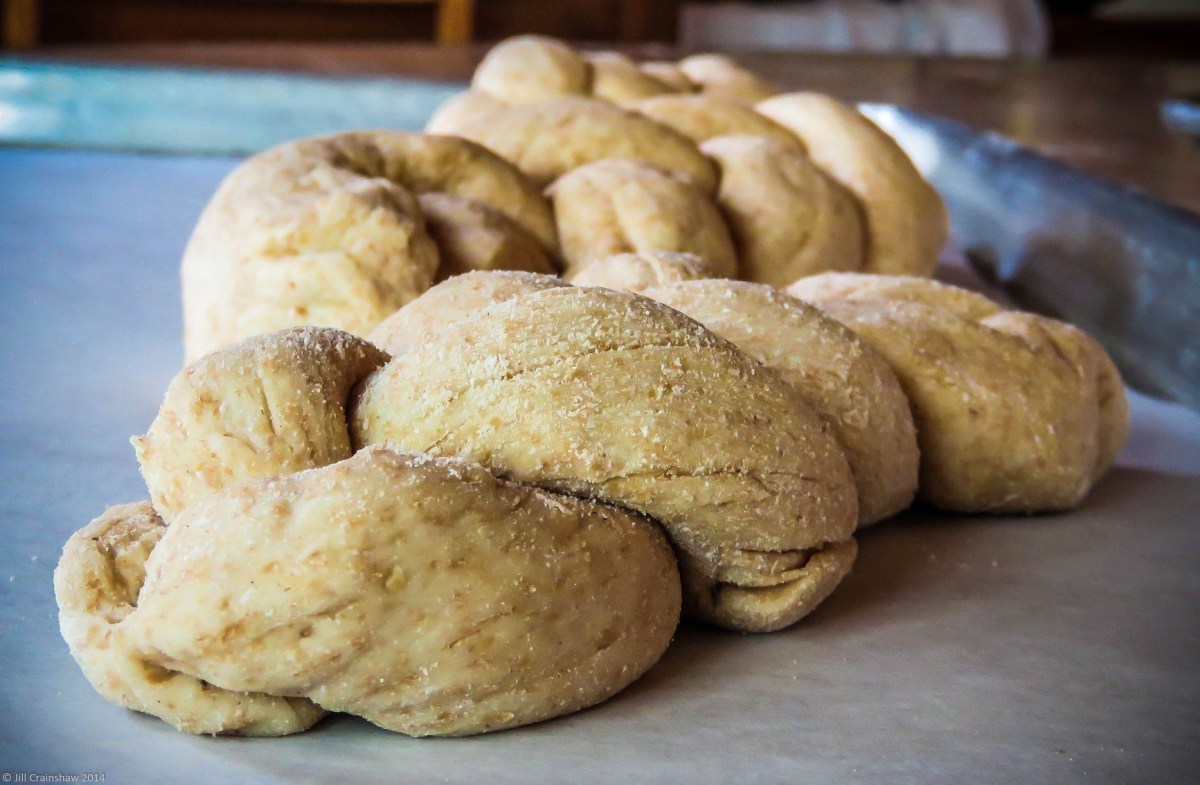
Grandma B.’s interpretation of Ecclesiastes was a description of kairos time and one way that we as broken and searching humans can seek out and live into God’s presence and grace in our lives. I try in the poem below to capture the mystery and beauty of Grandma B.’s wisdom.
God’s grace—the bread of life—is an amazing gift. Perhaps on this peculiar Palm Sunday we can lean into that grace and say “yes” once again to the Gospel call to cast our bread upon God’s waters of love and grace.
*******
“The days grow longer while the years get shorter.”
she sat on the porch,
rocking
leaning backward,
looking ahead
face mapping
trailing-off yesteryears
looking back at her in morning mirrors
dreams blossoming in
infinite fertile fields
dreams suspended
now web-wrinkles in time
she sat on the front porch,
rocking
leaning forward,
looking back
sharpening her gaze
on a flinty hurry-up world
some hurts, some happinesses lingering
behind perception’s deepening mists
how does a heart choose
what to remember?
that time my brother poured a pitcher
of ice-cold cherry koolaid in
a just-purchased bag of imperial sugar
the way mama napped on the olive
green vinyl sofa
our big ole Marco Polo cat
draped over her head and shoulder
the day my friends came to visit and we
packed into their fancy convertible car
rode on potholed roads through
the countryside and laughed and laughed
not instamatic photos stored
in flat plastic containers and
slid underneath the bed
no, some re-collections are camera flashes,
lightning illuminates a moonless night
so that you see what you hoped was there
all along but had forgotten in the darkness.
she sat on the front porch,
rocking
leaning forward
looking back
“i cast my bread upon the waters,
and it came back.”
“your bread?”
“i was kind to my friends
and they remembered
they came back when
i was too sick to travel to them—
bread upon the waters.”
for some time stands
stock still
suspended
on the front porch
leaning backward,
looking ahead
casting bread upon waters

 Salt: Seasoned Theology