
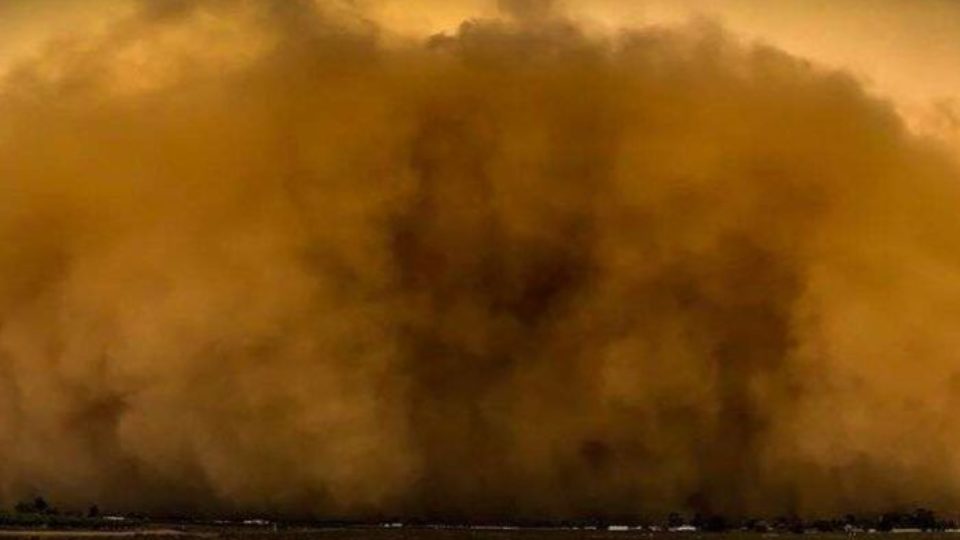
“We are waiting for the dust to settle.”
This idiom is alive and well in many communities—congregations, institutions, families, neighborhoods. We live, I think, in betwixt and between times, experiencing all of the uncertainties that arise in the midst of transitions.
Many things are up in the air all around folks these days. Some people are in between jobs or discerning how to respond to tough questions about their lives. Others are in the midst of changes in their families. And others face bitter and painful realities of transitions caused by forces beyond their control.
As a divinity school professor and interim dean, I am reminded every day that theological education is in the midst of change as religious landscapes across the U.S. shift and as people from many different religious backgrounds redefine how they understand spirituality. The dust of religious identity in the U.S. is unsettled, and when dust is unsettled, it can be hard to get a clear view of the future.
I offer here a few words of hope in the midst of unsettled dust.
A dusty story of creative hope.
Dust tells a story. Dust tells our story as human beings created in God’s image.
The Genesis creation story depicts God forming human beings from dust–from humus, the soil of the earth. As a religious image in biblical and Christian liturgical traditions, dust is referred to as the stuff of which humans are made and stuff to which humans return upon death. I explored this image from a different perspective in an earlier post.
As I think today about unsettled dust, the biblical and religious images of dust and creation remind me that human beings are in their very physicality part of the earth and with that reality comes a responsibility for care for the earth and its communities. Dust, even the unsettled kind, fertilizes the future, if you will. We, as creatures of dust, are the soil in which the future is planted.
Called to authentic dusty-ness
The reality of unsettled dust also invites us to rethink the meaning of “humility.” This week’s Revised Common Lectionary text is Luke 18:9-14, the parable of the Pharisee and the tax collector.
Much more can be said about this text and has been by biblical scholars and preachers (and will be said by yours truly in a sermon this Sunday at Sedgefield Presbyterian Church). For this post, the last phrases of the parable are striking to me:
“. . . for all who exalt themselves will be humbled, but all who humble themselves will be exalted.”
Luke 18: 14
What do I hear in these phrases? Again, the word “humus” comes to mind. Humus, humanity, humility—all three words share a linguistic relationship and a theological one.
Authentic humility is about recognizing our dusty-ness and remembering that God breathes life into us each and every day. God also calls us each and every day fully to be our dusty selves and out of that earthy authenticity to love each other and care for all creation.
Waiting for the dust to settle
When we are betwixt and between, we are tempted to be impatient for the dust to settle, for things to get back to an imagined and mythic normal. The danger? We might settle those things in our lives or our communities that need to remain unsettled until justice can be done or until healing can occur.
Also, if we are honest, we have to admit that most of life and living happens betwixt and between. Perhaps if we embrace the ambiguity of human life and recommit ourselves to relying on God’s grace and mercy, we can begin to unsettle “settled certainties” that perpetuate oppression and injustice.
Life is never settled—not really. But the promise of God’s love for us is. Because of that, we are called never to settle down or settle in until all people can share in the good gifts of God’s justice and peace.
Dancing with dust
So, I offer a word of encouragement to those of us who find ourselves in a swirl of unsettled dust. Perhaps if we lean into the ambiguity of unsettling times we will hear God creating and calling. And perhaps, if we are willing to take the chance, we will learn to dance and swirl with unsettled dust and in doing so prepare the soil of our lives and communities in the belief that Gospel justice and peace beyond imagining await us in the days ahead.

 Salt: Seasoned Theology