Giving Thanks for Neriah People

They embodied faith and courage when they decided to call a woman as their pastor all of those years ago.

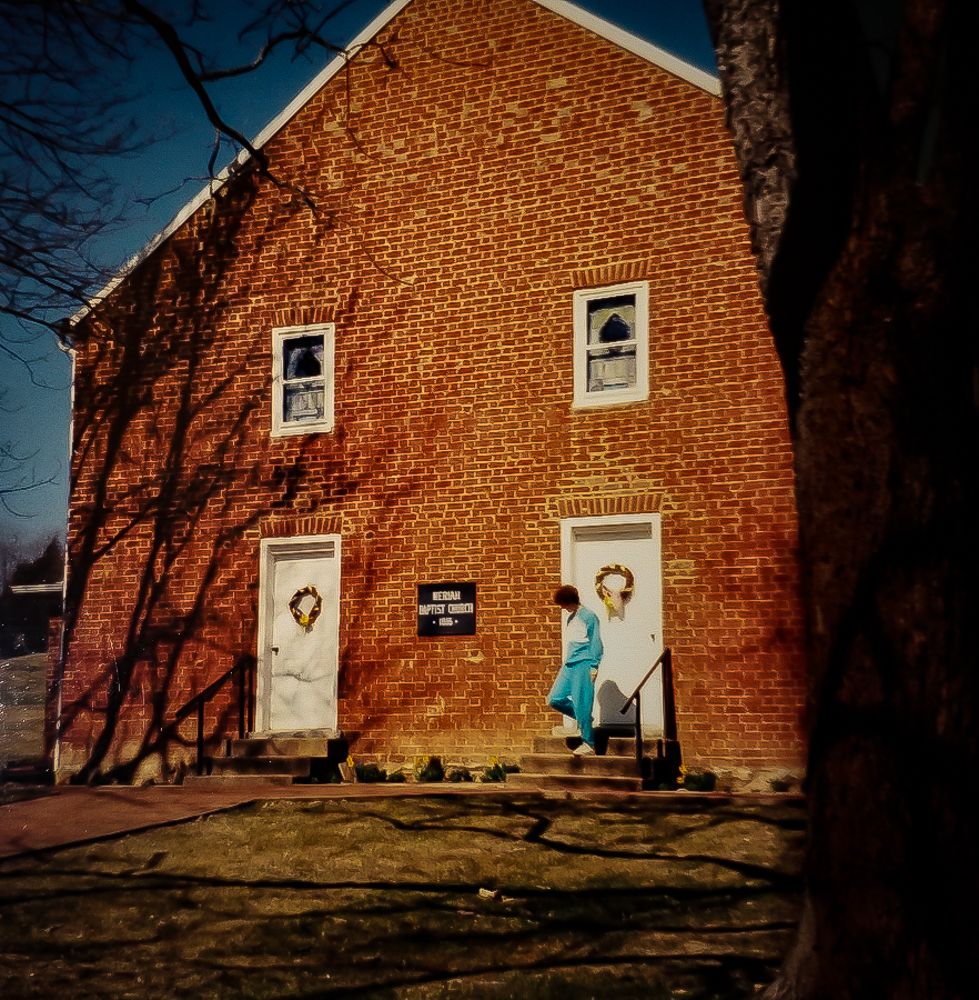
In May of my 26th year, I headed for the Virginia hills with high hopes for my first pastorate. The year was 1988, and the church was Neriah Baptist.

Neriah has an intriguing name. The word “Neriah” is in the Old Testament and is the name of Jeremiah’s scribe Baruch’s father. Neriah means “God is light.”

Neriah Baptist Church was full of God’s light.

Annie Dillard describes churches where members haul in from their gardens each Sunday flower arrangements the size of hedges. Those were Neriah people. Larger than life spirituality. Earth-connected faith. Neriah people—they were truck drivers, teachers, sheep farmers, principals, gardeners, artists, inventors, and determined huggers. And they were people of deep faith.

Now, becoming a pastor is by itself culture shock for someone only a few months out from her last theology exam. And for a town dweller who had never seen a sheep farm and who was a best a reluctant hugger? My education to be a pastor was far from finished.

My Master of Divinity degree prepared me for much of my pastoral work. I could exegete a Biblical text. My mind was alive with theological ideas. But no seminary professor reflected theologically with me about praying for calves in hayfields–something I did in my initial weeks at the church. And giving two sermons in a homiletics course is nothing like preaching every week. Sunday comes. Pastors preach. Then in seven days Sunday arrives, then in seven more days…

So, in the unexpected 4th year of my MDiv when I was called to be a pastor? I learned that Neriah people longed to hear a Gospel word every Sunday. I also learned that the hospital was 60 miles away and that driving to and from the emergency room in the night’s wee hours was wearying and that there were meetings and phone calls and pastoral visits and that all of this left little time or energy for a whole lot of things I thought would be my Gospel work.

What I now know and believe is this: all of it, baptizing and breaking bread at the table, blessing a child moments after she comes screaming into this old world, picking green beans with a church member while he cries and cries because his wife has been diagnosed with cancer—all of it, the grand pastoral actions and the ones that seem mundane. All of it is, well, liturgy.

Liturgy. Cathedrals come to mind. And communal prayer. And Gospel choirs. Liturgy is worship.

And in the ancient Greek city-states of 2500 years ago where the word was birthed, liturgy or leitougia meant “work of the people.” Liturgy in that context was work people did at their own expense for the public good—anything from street cleaning to bridge-building.

I wonder. What happens when we put the two meanings together? Liturgy is the work of the people to praise God; liturgy is also the work of the people to join God in God’s everyday work to care for and transform the world.

Neriah people taught me to embrace all of the meanings of liturgy. They taught me to get the dirt of creation underneath my fingernails, and in doing so, they instilled pastoral wisdom in me: the things we do again and again each day because we must? These things are liturgy, and God dwells in them and in us as we take up our everyday callings one moment, one step, one action at a time.

Neriah people taught me about bold works of justice-making when against all financial odds we opened a food pantry for people in our community. Neriah people taught me how to pray at hospital bedsides and offer blessings at dinners on the ground. Neriah people taught me to be a pastor.

I think about my Neriah years and Neriah people almost every day, and I thank God for their persistent faith and their generosity in sharing that faith and their wisdom with me all of those years ago. They embodied courage when they decided to call a woman as their pastor no matter what criticism might come their way as a result. I celebrate that I was the woman they called and that I had the opportunity to live out and deepen my calling to preach while working and worshiping with them.

My prayer for these days? I pray that we may all know the mercy and grace of Neriah–God is light–in our lives as we continue to work together to share Gospel justice, hope and love in our broken world. May we find the courage and faith to be Neriah people


Going Home, Home

God calls us to come home to our most authentic selves and then to be home for others who are seeking.

Photo by Sheila Hunter

My friend told me this story.

She was hiking down into the Grand Canyon on a rather warm day. A family passed by her going the opposite direction–out of the Canyon.

My friend overheard the young girl in the family lament to her mother:

“Mom, I want to go home.”

Her mom answered. “We will be home soon. When we get to the top–just up there–we will go back to our hotel and eat and rest.”

The girl’s response?

“No, Mom. I don’t want to go to the hotel. I want to go home-home.”

Being or finding or going home is difficult and painful for many people. This is the case for all sorts of reasons.

  • Consider the woman who moved for a job or a relationship and is struggling to get connected to a new community;
  • Or the teenager who ran away from a house that was never really home.
  • What about the family that escaped across a border of some kind and now can neither go back not see a way to go forward?
  • What about those people who can’t seem to feel at home in their own lives or even their own bodies?
Longing for home

Strangers in a strange land. Wandering. Seeking. So many people in our world today, at some time in their lives, long for home, even if they are not sure what home means for them.

For some of these people, faith communities become home. Or faith communities become home-like staying places, in-the-meanwhile dwelling places, for people whose lives are on the way to—well to many, often unknown, somewheres.

Or faith communities perhaps can become a for-now home. I long for this to be so.

“Not going home”

An unexpected image of “home”–along with the refrain of “not going home”–has gone viral on my Facebook feed this week. People who support women who preach have found in the phrase, “not going home,” a prophetic digital way to respond to and resist evangelical leader John MacArthur’s recent statement telling evangelist Beth Moore to “go home.”

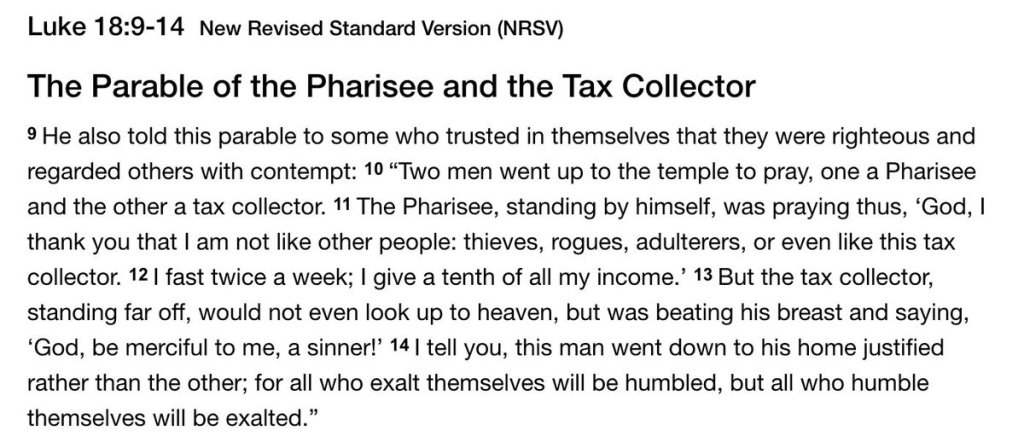
“Home” also stands out to me in this week’s lectionary text, Luke 18:9-14. At the end of this parable that features a tax collector and a Pharisee, the tax collector goes”down to his home justified.” Read other insights about this parable in yesterday’s post and see the full text of the parable at the bottom of this post.

These two accounts–the ancient parable and the trending Facebook post–are coinciding or colliding or perhaps colluding this week to stir unexpected thoughts for me about “home.”

What I am considering as a result of this collusion is this:

What new and life-giving theological possibilities for our times can we discover in images of “home” and “going home”?

At home in the role of wanderer

In the parable, the tax collector goes home from the temple “justified.” Having sought God in humility–in deep recognition of his humanness–he is grounded anew in God’s care and mercy for him. The tax collector goes home with a new sense of belonging within God’s love and grace. He may still be regarded in contempt by those who deem themselves more righteous than they think he is, but he can dwell in his own life knowing that he is a beloved child of God. He can go home justified.

And yet, even that profound image of going home contains a bittersweet reality. “Home” for people of faith is, in large measure, a life of seeking and wandering and wondering.

What does that mean?

Poet Denise Levertov writes of being “too much at home in the role of wanderer.”

Perhaps faith calls us to be at home, if you will, in the role of wanderer. Restless for justice. Always searching for healing, hope, grace. At home in the role of wanderer until we one day cross the border into God’s not yet commonwealth.

That, perhaps, is the power of Gospel wisdom. Jesus’ followers can never stop seeking. Not until all of the hungry are fed and violence has been stopped and no one feels the sting of exclusion. Not until all have opened themselves to God’s love and are empowered to go out into the world and love others, freed from both arrogance and shame.

But Levertov’s poem says that we risk being too much at home in the role of wanderers.

Some are too much at home in the role of wanderer,
watcher, listener; who, by lamplit doors
that open only to another’s knock,
commune with shadows and are happier
with ghosts than living guests in a warm house.

Levertov

Sounds like a conundrum, doesn’t it? We are called to be justice-seeking wanderers. We are also called to be at home in God’s love. Whew!

I think God’s call to people of faith in the midst of this conundrum is to pray and work together to imagine and create home—welcoming, non-judging, nourishing—home-for-now for all people who are seeking after God’s resting places of justice, grace, and peace.

This is not easy work. It takes courage. And a whole lot of grace.

Called to be home-home

But the call remains. We are called to be home for those whose lives are broken. To be home for our communities’ strangers. To be home for those whose stories have left them isolated, alone, without hope. We are called to be home for now until all of us–wandering people that we are–finally can go “home-home.”

In the case of many amazing and prophetic women I have been blessed to know? They are at home in the role of preachers. Their home-home is in a pulpit. By saying “yes” to God’s call to be proclaimers of God’s justice, love and grace, they have embraced something central to their identity. And they have come home to themselves as Gospel proclaimers, justified by God.

Come home free

I am reminded of an old time version of a kids’ game—hide-and-seek. Maybe some of you remember the “song” that goes with the game? “Ollie, Ollie oxen frei.” This is what those who have been found sing out to the one who has been hiding the longest—to the one not yet found: “Ollie, Ollie oxen frei.”

An approximate rendering of the German phrase is this: The game is finished. All is forgiven. You can come home free.

We are all to varying degrees both Pharisee and tax collector. We are also neither tax collector nor Pharisee. We are human. We are exalted dust. And a God who never stops seeking for us calls us every day to come home to our most authentic selves–

I pray that we can remember and live this wisdom.

By God’s grace, let us be places where restless and yearning wanderers, found by God’s grace, can come home-home free.