
A reflection for Holy Monday
Truly I tell you, wherever the good news is proclaimed in the whole world, what she has done will be told in remembrance of her.
Mark 14:9
Giggles. Squeals of excitement. Sounds of children danced in syncopated rhythms into the wind.
“Brad! This is the biggest one EVER, except for that one over there. And look at those three humongous ones, if I could just reach.”
A voice drifted through the brush.
“I bet none of those are as big as these over here. I’ve NEVER seen one as big as THAT.”
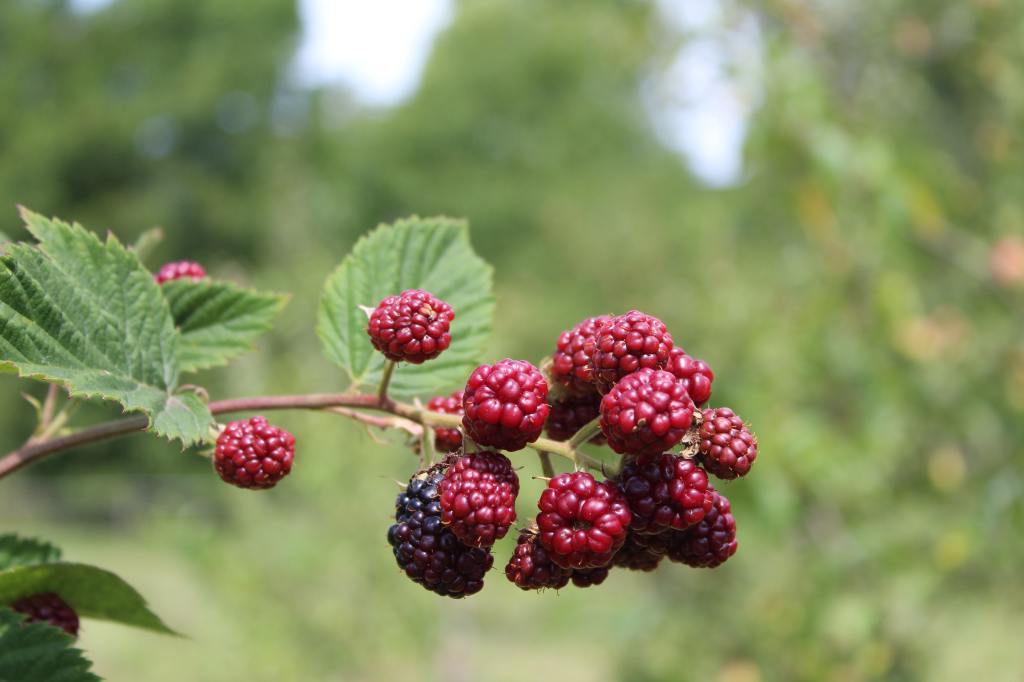
It was a wonderful, supercalifragilifical afternoon. But then, if you’ve ever picked blackberries, you know what I mean. There’s just something about heading down a forest path, talking, looking, contemplating–then you spot it. That first bunch of plump sweet yummy jewels of the forest. Just in the distance down the path.
Yes, blackberry picking tantalizes, because it seems that just when we’re reaching for the “biggest one ever”? We spot an even juicier-looking one over there, one so plump we can almost taste it squishing into our mouth and deliciously tickling the insides of our bellies.
So the ritual goes. We taste-test our way from one big ole blackberry to the next one–eating some, saving others to ooze over ice cream, and with no small amount of regret, giving up on some because they’re “just beyond my reach.”
Yes, there’s something about blackberry picking.
Blackberry picking and Life Journeys
Now, I invite you to imagine with me, just for a homiletician’s metaphorical moment, that life and blackberry picking share some similarities.
Consider. How many of us stay forever at one spot on life’s path? Most people today (when we are not quarantined) are always on the go–hurrying, rushing, running, bustling, hurrying–from one goal to the next, one dream to the next, one best-idea-ever to the next.
Blackberry picking and human life journeys? Oddly similar, because in life? No sooner do we get to one yummier than ever destination than we spot an even yummier-looking one just down the road. And it is not long before our imaginations have taken to the wind, conjuring up all of the even plumper, juicier destinations that must be waiting just around the bend.
The next thing you know? We are off and running, rushing, hurrying, running, hoping.
Sometimes all of this movement is a good thing, full of joy and new discoveries. Other times? Not such a good thing, especially if we get lost or tangled in a briar patch.
Either way, the fact remains. Life doesn’t stand still. Whether things are peaceful or chaotic, plump and juicy or shriveled up, we humans seem always to be leaving one thing for another thing. It is the way of life. We spend most of our time on the way to somewhere, until finally we get to the last of our somewheres. And it makes me wonder. When I get to the last of those somewheres and look back over all the places I’ve been, what will the journey have meant?
Meanderings of the mind such as these on Holy Monday have sparked the idea that maybe I need to pay more attention to the berries that are hanging ripe on the vines between the gargantuan ones that always demand my attention. Maybe I need to pay more attention to those “wide places in the road” I sometimes zoom through on my way from here to there.
Why? Because maybe I’ve been missing out–maybe too many people are missing out–on the God-faces that peer out at us from windows and doorways that are on the way to our big dreams and destinations.
It’s odd, isn’t it, the places we end up between the “big berries.” But sometimes, in those in between places, faith’s most profound wisdom leaps out onto the road to meet us. To teach us.
Unexpected Bethany blessings
For me, going from being a pastor to being a doctor of theology by way of a town called Louisa made me read Mark 14:1-11 with different eyes. Because Louisa? Back in those days, Louisa was on the way to everywhere, as long as you had at least an hour to make the trip. Louisa had one motel and a Pizza Hut and no Walmart.
Bethany may have been that kind of town too, a pebble-sized suburb half a day’s walk from the city. But Bethany was the place where Jesus stopped on his way to Jerusalem. And Bethany was a place where something powerful and beautiful happened.
Of course, if we’re not careful, in our excitement to get to “wherever,” we’ll miss it. We’ll miss the wonders of our own Bethanies.
Bethany. Can we see the story? Hear its sounds?
I picture Simon’s nephew bouncing on Jesus’ knee. Jesus’ eyes dancing with light like fireflies in a summer field.
Bethany was like that. It was a place where Jesus could stick his head into Martha’s kitchen and catch a whiff of his favorite bread. Bethany was a place where Jesus could sit with his friends Lazarus and Mary, listen to the crickets, watch the stars poke their heads through the curtain of a soft night.
Bethany was the kind of place where you could borrow a donkey for a parade.
And Bethany was a place where something prophetic and extraordinary happened.
It is hard to say why she did it. Maybe she was young, one of those people who paint every place they go with youthful aliveness. Or perhaps she was older, not so energetic anymore but determined to keep on living out what she believed. Or it could be that she was tired of the way her life was going and decided that day to step off the road she was on and follow the path of her heart.
Whatever the reason, this picture in Mark’s art gallery stirs the imagination. The pattern is true to Marks’s form. The story is a kaleidoscope of contrasts, reversals, surprises and double meanings. This vignette of Bethany is a Markan masterpiece of color and light sandwiched between two images of uncertainty and betrayal.
Just before this picture? Sillouhetted in the shadows, religious leaders whisper and plot. Jesus will die.
Just after this picture? Jesus’ friend betrays him out for some pocket change.
But between these two? Bethany.
Before anybody even noticed her, there she was, filling the room with her presence, walking with courage from the margins into the center of that picture of men to turn everything upside down. In the midst of the whispering and plotting and scheming, she pours expensive oil on the head of the one she believes is the hope of the world. She breaks open her heart.
Silence slices through the noise. The disciples’ stares stab the air.
Jesus speaks.
“This woman has done a good thing for me. When she poured perfume on my body, she was preparing me for burial. I tell you the truth, wherever this Gospel is told, throughout the world, what she has done will also be told, in memory of her.”
On a quiet evening in a town on the margins of the “sacred” city, we glimpse God’s true dwelling place. Not in the temple but in the house of a leper, we glimpse Gospel truth. In that moment, not in the actions of religious leaders or disciples, but in the actions of a woman whose name we don’t even know, we glimpse God’s vision for the redemption of the world.
She confesses her faith, and as she anoints Jesus she joins hands with all of the suffering and marginalized and silenced people in the world.
And the part of the story that startles us awake to an unexpected truth? Verse 13.
Every time the Gospel proclaimed, what she did is told too. In memory of her.
What happened on the way. . .
In memory of an unknown woman from Bethany. In memory of a voice from the margins who became the voice of God.
Yes, every time someone is baptized or a prayer is spoken, what she did is shared too. In memory of her. In memory of a woman who looked beyond the world.
Every time someone visits in the nursing home or feeds the hungry, her story is told too. In memory of her.
Every time we break bread around the Lord’s table and remember, her story is told too, In memory of her.
Every time the Gospel story is told, what she has done is also told, in memory of her. In memory of a woman Jesus met on the way to where he was going.
Bo and I were hurrying on our way to somewhere when we saw it.
“What was THAT?
Bo turned the Jeep around and there it was. A baby owl on the side of the road.

Bo inched toward the little creature. It was breathing but not moving.
Bo placed the owl in his baseball cap and we drove on down the road toward–well, we weren’t sure where to take the injured bird. Then suddenly–
“Bo. Stop! It’s trying to fly.”
It seemed suddenly to dawn on the little fella that he was in a car instead of a nest.
Something must have paralyzed the owl with fear, and once it had been held for a moment in Bo’s cap, life was restored. The owl was ready to travel on.
Bo stopped the car, and what happened then on a winding road just after nightfall? That is the odd thing. I can’t remember where we were going that evening, but I’ll never forget what happened when we stopped along the road.
Bo took the bird out of the cap and lifted it to the heavens. And the owl? It opened its wings and journeyed on to the rhythms of the wind.
We don’t stay very long in our Bethanies. We live in a world of myriad hellos and goodbyes. I wonder. When we get to the last of all of our somewheres and look back over all the places we have been, what will we see? What will our lives have been about?
One thing seems certain to me on this Holy Monday in 2020. My life will make more sense to me if I take time to hear the truth of this story in Mark: everywhere we go on the the way to wherever we are going, a face waits for us–the face of that woman in Bethany whose prophetic voice has too often been drowned out by the voices of the world.
She reminds us. And Jesus reminds us by the way he responds to her in this story. Those faces we meet on the journey? Those people who care for the sick and feed the hungry and teach our children and drive a neighbor to the doctor? All those people whose voices have never been heard by the world but who struggle to live God’s grace and love every day?
Every time the Gospel story is told, their story is told too, in memory of them. Because in their faces of care and courage, we see the face of Christ. In their voices, we hear the voice of Christ.
It’s important to remember, you see. Christ is not just the one we’re on the way to; Christ is the journey. For Christ is the way, the truth and the life. . .

 Salt: Seasoned Theology