
Leadership, Artistry, and a “Sense of Place”

Like pipe organs, we learn to breathe in and with our communities. . .

I saw my neighbor, Dreama, at the community cafe this morning. Dreama is an organist. She teaches organ and provides music for Sunday worship at a local church. Dreama is an artist who is passionate about her art. Something she said about being an organist intrigues me.

“We organists are a peculiar group. We love our instrument—the organ—but we can’t take our favorite organ with us when we go out to share our work. We have particular organs we love to play, but we can only play them in the place where they live. Organs are not really transportable.”

Thank you, Dreama, for inviting me to think about how important it is that people in all professions pay careful attention to the places where we do our work. Having a “sense of place” is vital to the effectiveness of our professional endeavors. It is also vital to the life and health of the communities where we hang out our shingles, if you will, as artists, doctors, lawyers, teachers, ministers, and others.

What is a “sense of place”? Some people say a locale’s “sense of place” is shaped by the characteristics that make it unique from other locales. People are drawn to these characteristics and are connected to places over a lifetime because of experiences they have in them, whether good or bad. Communities cultivate a healthy “sense of place” when they instill in their residents an authentic sense of belonging. And an authentic sense of belonging can heal broken hearts, foster peace and inspire hope, and lead to overall communal well-being.

Dreama, as an organist, has had to cultivate an awareness of place as vital to her artistry. She plays organs in diverse locales. Each organ in each locale is unique, designed by a particular builder and then constructed, in part on site, to fit the architecture and acoustics and sometimes oddities of the space.

Author Agnes Armstrong specializes in the history of 19th Century organists and organ music. She writes that

in medieval times, a builder would move his workers and often his entire family to the site of his next organ. They might even take up residence inside the cathedral being built around them, sometimes for a year or more. There they would be devotedly occupied with building the organ. . .

Agnes Armstrong

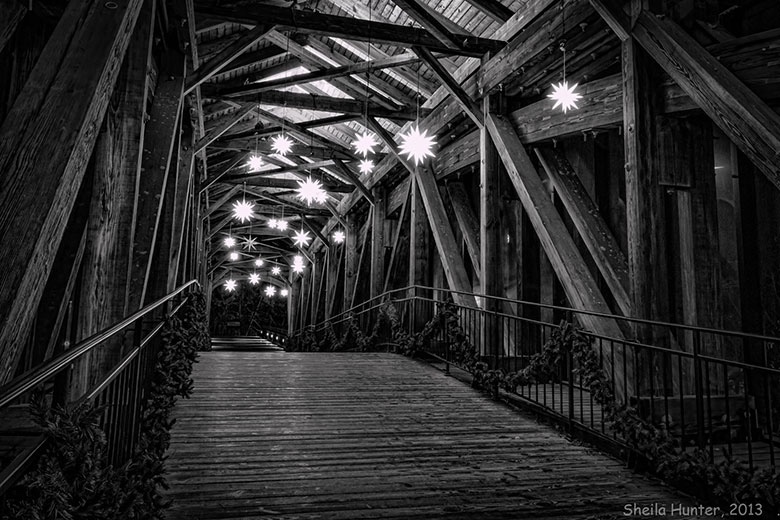
Organs, especially pipe organs, become a part of a place’s architecture.

Organs also hold stories:

“I will never forget how I felt when I heard those first organ notes as I came down the aisle on my wedding day.”

A woman in a nursing home remembering her wedding

“I remember hearing all of Mama’s favorite pieces played on that organ for the prelude at her funeral.”

A family member’s recollection of a funeral service

Good organists develop their musical skills and expertise over their lifetimes. Amazing organists also attend to each organ’s peculiarity and to the stories, memories, and connections that are present when they sit down to accompany a choir or perform a concert.

Photo by Sheila G. Hunter, 2014.

I am grateful for the conversation with Dreama. She is an amazing organist. Her wisdom about her art reminded me to lean in to the places where I go as teacher, poet, and preacher to listen for all of the voices and stories that make a place what it is. The health and well-being of leaders and the communities we serve depends on a rich meeting or intermingling of our story and skills with the particular and peculiar stories, gifts, and challenges of the places where we serve.

Agnes Armstrong writes that “pipes in a newly constructed organ must ‘settle in’ and ‘make their own community’” within the space where they reside. We all do that when we bring our artistic and professional endeavors to a new place. Like pipe organs, we learn to breathe in and with our new communities, and in partnership with them to make music that is unique to us and that has the potential to make a difference in our world.
If I Could Write a Viral Blog

What if someone told me that my next blog post would go viral, no matter the topic or content?

what would I write about?

The world is chaotic. Crazy-making. Even frightening.

What if someone told me that my next blog post would go viral, no matter the topic or content? What would I write about if I knew my words would be viewed and maybe read by 10,000, even 100,000, people?

This question has been wandering around in my mind for the last few days. I attribute this to several things. Gifted with some time to read, reflect, and write this week, I have found myself pondering the purpose of my wordsmithing. Do I write to express myself? To create? To live out a calling? Or do I write to stir the hearts and minds of readers, to make a difference of some sort?

I write for all of these reasons and more. I also write to connect a yearning within myself to yearnings within potential readers.

And the world is chaotic. Crazy-making. Even frightening.

Because the world is all of these things, none of the above reasons for writing are adequate. If I could write a blog that was fiery or clever or beautiful or lyrical or philosophical or something else enough to catch the attention of readers I do not know and will never meet, what would I want to say to them? Do I have anything to say—to wordsmith—that speaks to the chaos and uncertainty of our times?

Blogger Nicolas Cole quoted a mentor about some writers’ desires to “go viral”: “They want fireworks. They don’t want to build a constellation.” Some readers and publishers prefer fireworks, too. I understand that. I have read viral blog posts that amaze, astound, and inspire. I respect the writers of those posts and admit to some amount of envy. I want to be a good, even great, writer, but I don’t think I am one of those writers who crafts posts that go viral.

Maybe the gift I have to offer—the gift all of us have to offer—to most situations is consistency of authentic and generous presence. This is what writing and blogging and my life as a professor are teaching me. My friend Sam comes to mind as an example of consistency of presence. He shows up for people. I see him everywhere—at celebratory events, city-wide gatherings, one-on-one lunches, countless committee meetings, funerals. Sam shows up and his presence matters. Over time, I have grown to count on Sam’s presence. Respect him for it. Cherish it and him as prophetic and vital parts of my community.

Perhaps the way I can become a consistent presence as a writer is to keep writing. Perhaps the way I can respond with wisdom to the uncertain and too often frightening realities of our times is to show up over time with the most substantive and honest words I can muster—and then back those words up by striving to be a consistent, caring, and authentic presence wherever my daily journeys take me.

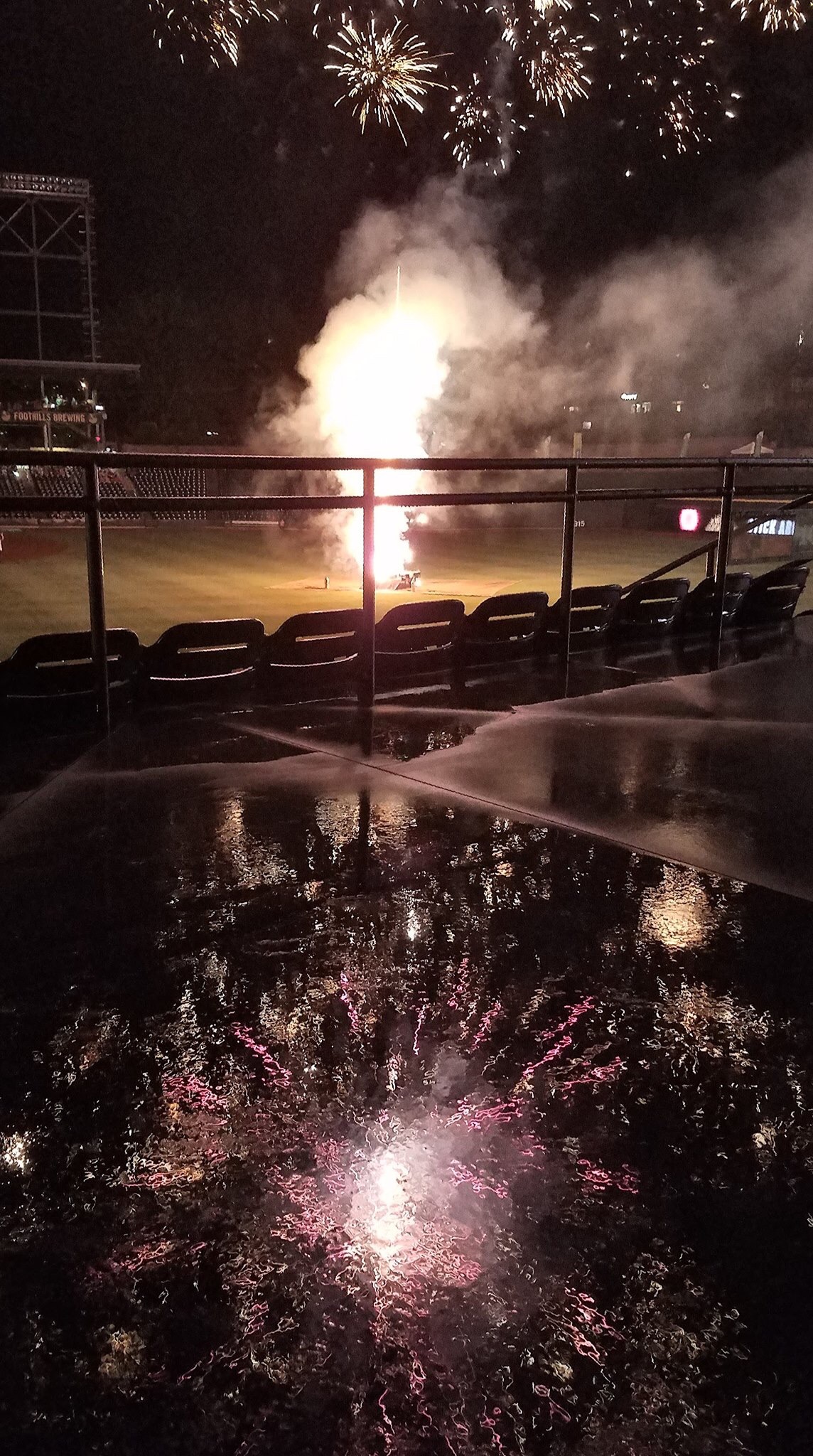
Photo by Sheila G. Hunter

This summer I went to quite a few minor league baseball games in my city. Friday nights are fireworks nights at the baseball park. One Friday night, I was walking to my car as the final fiery waterfall filled the evening sky. I stopped to watch, and as the glittering lights faded, I noticed behind the smoke the glow of a cluster of stars.

Fireworks can be breathtaking and awe-inspiring. Fireworks are also momentary. In our chaotic world, much of what we thought was reliable or certain has been shown at best to be fleeting and at worst to be undependable. Perhaps a stabilizing message I can express across my lifetime—including across my life as a writer—is the hopeful and mysterious promise of the stars.

So, another blog post ends. Tomorrow I will attempt to write again. And again the next day. My aspiration? To create a constellation of words, images, poems, and stories that offer a steady presence of wisdom-seeking in an uncertain world. And when I push “publish,” I will go out and try to embody the words I write.