Many contemporary realities sparked this poem. Increasing homelessness in many cities. Failing churches purchased by real estate agencies and transformed into apartment buildings. Domestic violence. Nostalgia. Hope. And the awareness that human stories meet, overlap, clash, and sometimes heal.
“Don’t dwell on the past,” they said When her fingers flew unbidden To touch nostalgic eyes; Yes,
She would — remember — to forget — If she could. Swipe away the wetness Sliding down her face; worried It might seep between her lips, Unseal them so she breathed out A salted stench of yesterday’s news: “Don’t dwell on it.”
She had no dwelling anyway, Door bolted; key flung away. Windows boarded up. Rendered Unfit for human habitation. Hands curled, fists pounded, demanded entrance; Fear said “no,” misguided sentry keeping out Everything even shriveled up tendrils of Purple deadnettle that trying to crawl Through the cracks: “No-dwelling Zone.”
They moved in last Saturday, 129 U-Haul boxes crammed full of life. “We’ll put grandma’s dining table Here,” she said. Did she know They would taste springtime strawberries and snow peas there, bare feet on the hallowed ground under that table where a body was broken, blood poured out?
They sat, sipped grocery store wine, Dwelling in the past.
A ritual devised to meet the needs of a beloved aging dog had become a sacred nighttime gift.
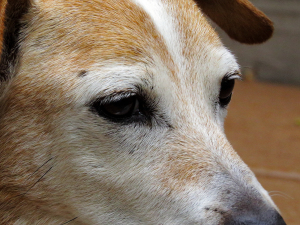
I named my blog domain for a beloved Jack Russell terrier Sheila and I adopted. He grew old as he, Sheila and I journeyed life together for a decade or so. His name was Deacon. I blog at DrDeaconDog.com.
Sheila said Deacon was an apt companion for a liturgical theologian like me because he was devoted to rituals. Deacon was committed to “the way we do things every day,” from getting up at the precise getting-up hour to walking each morning without fail, to eating at the same time every day, to sitting together in our favorite chair at the appropriate time every evening.
As Deacon grew older, he needed more assistance with his last trip outdoors before going to bed. This required a change in our nightly bedtime ritual. Now, instead of sending Deacon out the backdoor into our fenced yard just before settling in to sleep, I suited him up with his harness and leash and walked with him up and down the sidewalk out front.
Much to my surprise Deacon embraced with his usual ritual fervor this change in our nighttime habit.
I was less enthusiastic.
“You’re a liturgist,” Sheila said when I complained about the new bedtime outings. “Can’t you turn this into a meaningful ritual? Maybe you can think of it as saying goodbye to the night. Don’t you liturgical theologians love that sort of thing?”
Sheila had a point. I began to consider how Deacon was teaching me to pay attention to the night. As I became more intentional about saying goodbye to each phase of the moon, a new orientation to the gifts of eventide seeped into my bones and recalibrated how I embraced the final hours of each day.
Over time as Deacon and I wandered up and down our neighborhood sidewalks, I began to reflect on the happenings of the day as I looked up into the expanse of a sometimes clear, sometimes muted, night sky. In spite of myself I began to experience wonder in my heart and in the soles of my feet—in the marrow of my bones.
A ritual devised to meet the needs of a beloved aging dog had become a sacred nighttime gift.
Photo of Deacon Dog by Jill Crainshaw
A nighttime goodbye chant began to emerge as autumn gave way to winter and our walks continued. I was surprised that as the chant emerged from the womb of the evening, its arc stretched from sunrise to sunset and across the human and canine life span.
I was also surprised to realize that the chant was the first poem I had ever written. It was a hymn of praise and petition lifted to an unexpected additional companion–a Holy Other—who met me and Deacon each night and walked alongside us.
When the sun lifts its head in the eastern sky, And the birds begin to sing, We give thanks, O God, for the dawning light, And the symphony of hope it brings.
Fill my feet with the joy of the morning. Tune each tendon to the sounds of your grace. Let each step I take through the streets of the city Be a note in this hymn of praise.
When we say our farewells to another day, And the stars begin to shine, We give thanks, O God, for the moon at night, And its promises of rest sublime.
Fill my dreams with the hopes of tomorrow. Lay me down to sleep and give my soul your peace. Restore my hands; bless my feet; calm my restless thoughts. May the worries of the day begin to cease.
When age takes its toll on my body And my hands become feeble and frail, I will lift them up to give thanks to you And I’ll pray for the strength to sail
Over the river Jordan Under your stars and your light. Please guide my boat to the other shore As I say goodbye to the night.
Note: A version of this post and the poem appears inmy recent book, When I in Awesome Wonder: Liturgy Distilled from Everyday Life, Liturgical Press, 2018.



 Salt: Seasoned Theology