
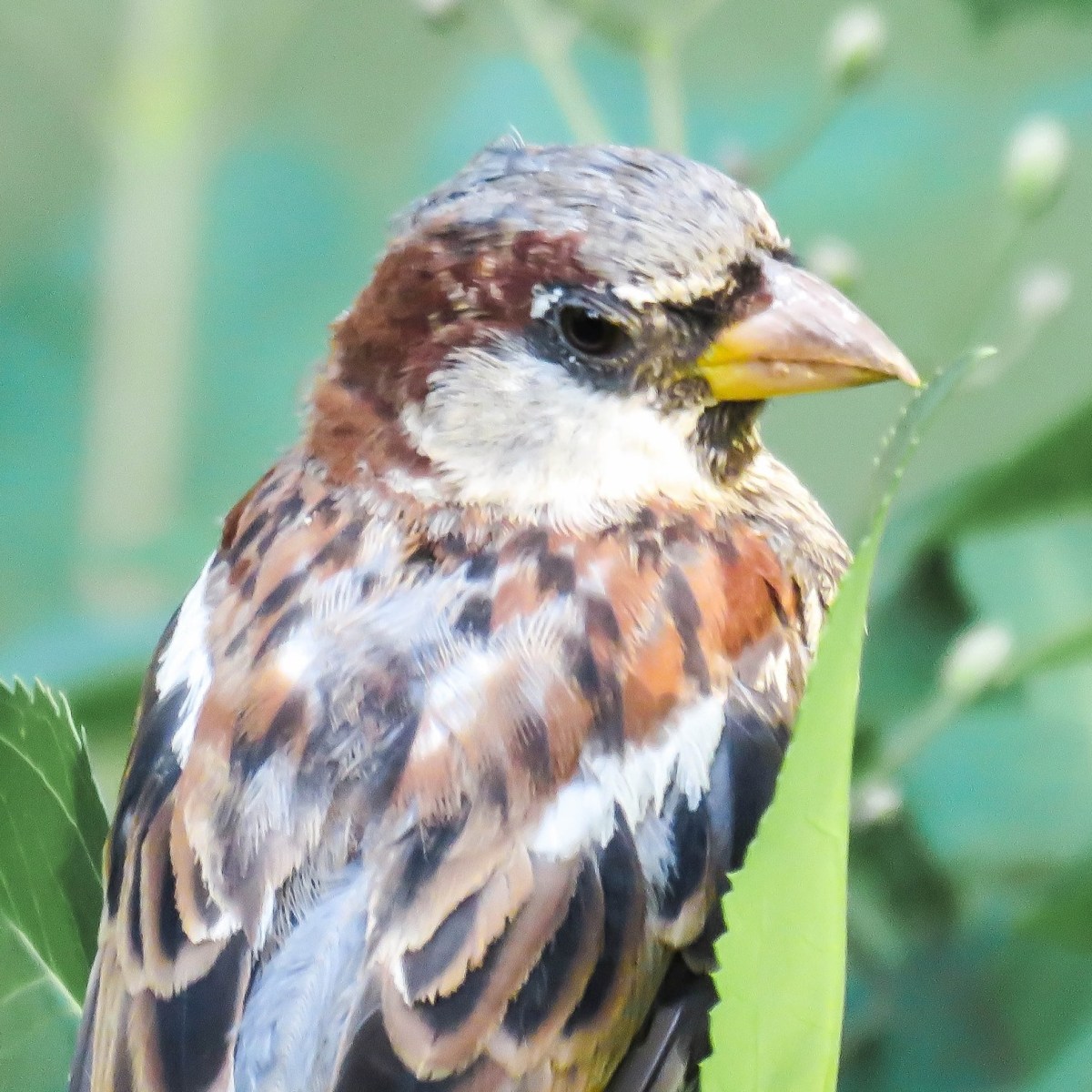
With Our Eyes on the Sparrows

God holds the sparrows and us–each and every one of us–in God’s eyes.

Sparrows love the camellia bush just outside our back door. The bush bloomed with extraordinary enthusiasm this spring. Maybe the sparrows just can’t get enough of the flowers’ pink lemonade. 

Whatever the reason, sparrows are bounteous and busy in our backyard. And they are quite fearless too. Just yesterday one of them landed with confidence on the deck rail and stared me in the eye. Do sparrows play chicken? 

Until my encounter with that particular plucky sparrow, I had not given much thought to these tiny, inauspicious birds. Our yard teems with them, darting from fence post to forsythia to tree limbs to lamp post, and their earth tone patchwork costuming has never inspired my eyes. 

But sparrows seem to inspire God’s eyes because they show up by name in the Gospels as luminaries in one of Jesus’ proverbs:

Are not two sparrows sold for a penny? Yet not one of them will fall to the ground apart from your Father. And even the hairs of your head are all counted. So do not be afraid; you are of more value than many sparrows.

Matthew 10

This week I have watched our backyard sparrows with what has become a thrum of statistics and numbers and quantitative predictions rumbling in my heart and mind. How many people will test positive with COVID-19? Of those, how many will need ventilators? How many ventilators are available? What percentage of the COVID-19-positive will die? How many points will the Dow fall today? How many people will lose their jobs?

The most troubling question that has joined my heart-thrum is one implied by a political leader in Texas several days ago: How many people (and what demographic of people) should be willing to sacrifice treatment to “save the country”? 

Jesus’ choice of sparrows for his proverb was intentional and prophetic. Vendors in those times sold sparrows for people to offer as temple sacrifices. Sparrows were cost effective. Two for a penny.

And yet–Jesus sees prophetic wisdom in sparrows. Maybe that is because they delight God’s eyes with their subtle but profound diversity. Ask birdwatchers. They will tell you that the U.S. is a home for the Tree Sparrow, Golden-crowned Sparrow, Chipping Sparrow, Grasshopper Sparrow, House Sparrow, Fox Sparrow, Saltmarsh Sharp-tailed Sparrow, Seaside Sparrow, Field Sparrow and at least 30 more types. To see the feathery nuances of all of these types, watchers have to hold the sparrows in their eyes. 

An old hymn sings of sparrows: 

His eye is on the sparrow,
And I know he watches me—

Civilla D. Martin, 1905

God holds the sparrows and us—each and every one of us humans—in God’s eyes. 

Our local and global human communities face many tests in this crisis moment. A test question I consider most critical to our future flourishing is this:  Will we hold the sparrows in our eyes as we make decisions about numerical bottom lines? 

This question dwells at the heart of what I believe is the Gospel. Perhaps now is our time, as communities of faith, to do what we have not done in Gospel spirit and truth across our collective history. Perhaps now is the time to learn to care for each and every person and in particular for those who have been and are most vulnerable. Perhaps now is the time to keep our eyes on the sparrows and from that vantage point wrestle with the complex moral questions that are arising out of the mist with each new pandemic-plagued day.

In this, for me, nests our hope–that even as God cares for us, we are called to care for each other. Yes, God is calling us in these days–“keep your eyes on the sparrows.” I pray that I will have the wisdom and courage to do just that, in the name of the One who creates, redeems, and sustains us and our world.
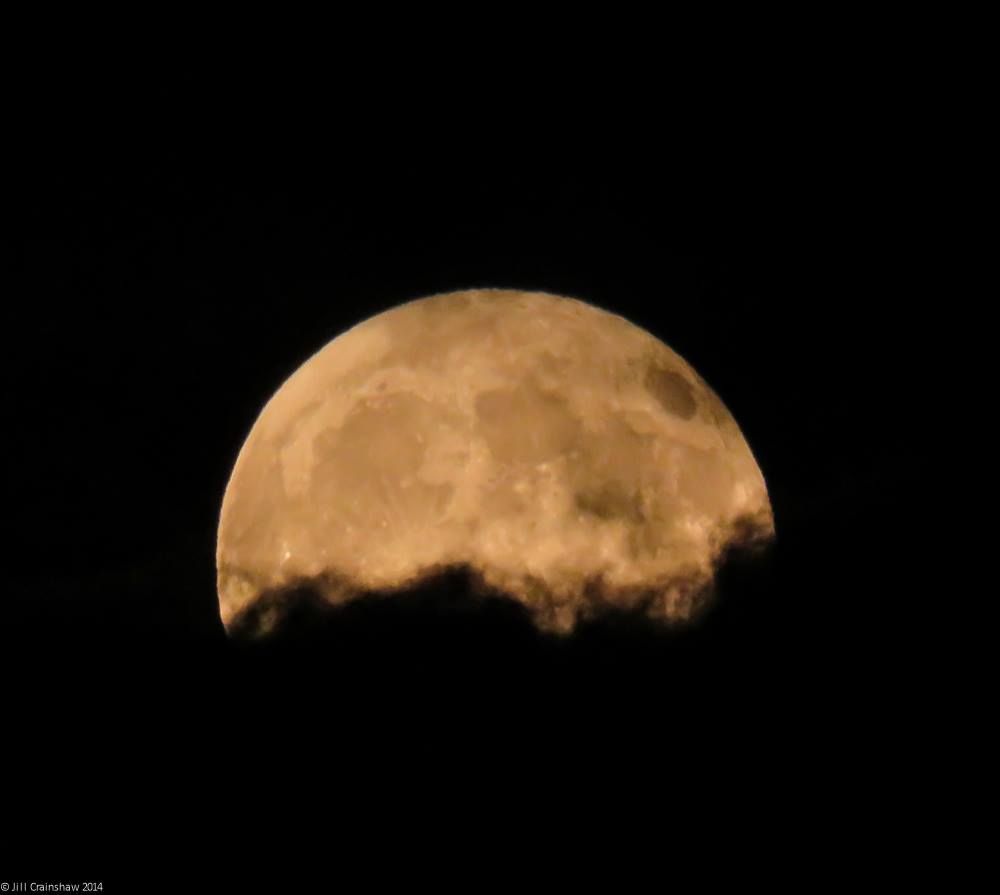
Dear Midnight

Dark nights of the soul—midnights—offer graces and blessings beyond our most radical imaginings.

Rain chased us into the house. We just did escape her.

Then she did her saturation dance on our greening yard, our back deck, our roof—all through the night. 

I know this because I stayed up past midnight listening to her. And thinking. 

An article in Politico on Friday lured readers with this title—“Coronavirus Will Change the World Permanently: Here’s How.” What the writers predict both intrigues and troubles. And I think they are right. This moment in time is changing all future moments in ways large and small that we cannot even imagine yet. 

We humans have always been more fragile than many of us realize or acknowledge as we go about our daily routines. Some of us know because of our own stories that life is a bittersweet mixture of wild wonders and wilderness wanderings, of joyous grace and jarring lament. Even so, we still don’t always wash our dishes, do our jobs, care for our children or do a whole assortment of other activities with this awareness front and center in our consciousness. 

Now, as a global human community, we are encountering with every sud that baptizes our hands and with each of our daily breaths just how uncertain life is. We are experiencing a global “dark night of the soul.”

And yet—dark nights of the soul—midnights—also offer graces and blessings beyond our most radical imaginings.

Some people in our communities have beheld and embodied these graces and blessings all along through their everyday days as they have lived with chronic illnesses or life-denying dangers in their communities or other persistent uncertainties in their lives. These people have already shown us how to embrace aliveness in the face of threats to human well-being and even human existence. We can look to them for wisdom and hope. They are too often unheard and unseen heroes and sages.

Yes, COVID-19 is changing us. Or perhaps it is awakening us to who and what we already were and are.

My prayer is that we say “yes” with courage to shaping what happens toward the love and grace of God. A former student of mine, Jesse Sorrell, is now a hospital chaplain. He shared powerful insights in a recent Facebook post:

Shift calls for response. Creation responds to decreation. Art arises from grief. What can you create right now?

Jesse Sorrell

Thank you, Jesse, for this reminder of the creativity that nests even within uncertainty and grief.

This moment in history is changing all future moments. Hmm…but doesn’t every moment in some way shape all future moments? What life-giving change can we live right now?

My poem is addressed to Midnight and wonders what we as a human community might learn in this time of uncertainty and scatteredness.

Dear Midnight,

Who do you talk to
when the wrens and robins
go quiet in a storm?
You know, when lightning
strikes every city in every land 
and ignites down deep darkness?

The tiny terrier and I
cock our heads–
She growls down deep,
suspicious at not hearing
electricity scurry
through the house.

Rain tiptoes toward us
then chases us home,
silken hair flying out behind her.
She slips inside the house as the
door slams with a sonic boom
and a splinter of light–

Silence sidles in too,
scampers off into corners
and down deep into crevices
as we all peer out the window
at a sky homesick for stars.

Dear Midnight,

Can you tell us what it all means?
You, who wander fields and forests
seeking the fierce feeble embers
of once-fiery mornings–

The tiny terrier and I
cock our heads–
and in the dripping
down deep darkness
a train whistle melts 
into the rain-slick trees 
while a beatific barn owl
queries the night.